
2022: Ildikó Enyedi, “Dramaturgy: A Secret Weapon”
Ildikó Enyedi, “Dramaturgy, a secret weapon“
Humboldt University Berlin Mosse Lecture
mosselectures.wisc.edu/berlin/
Thursday, 10 February 2022, 19:15 CET
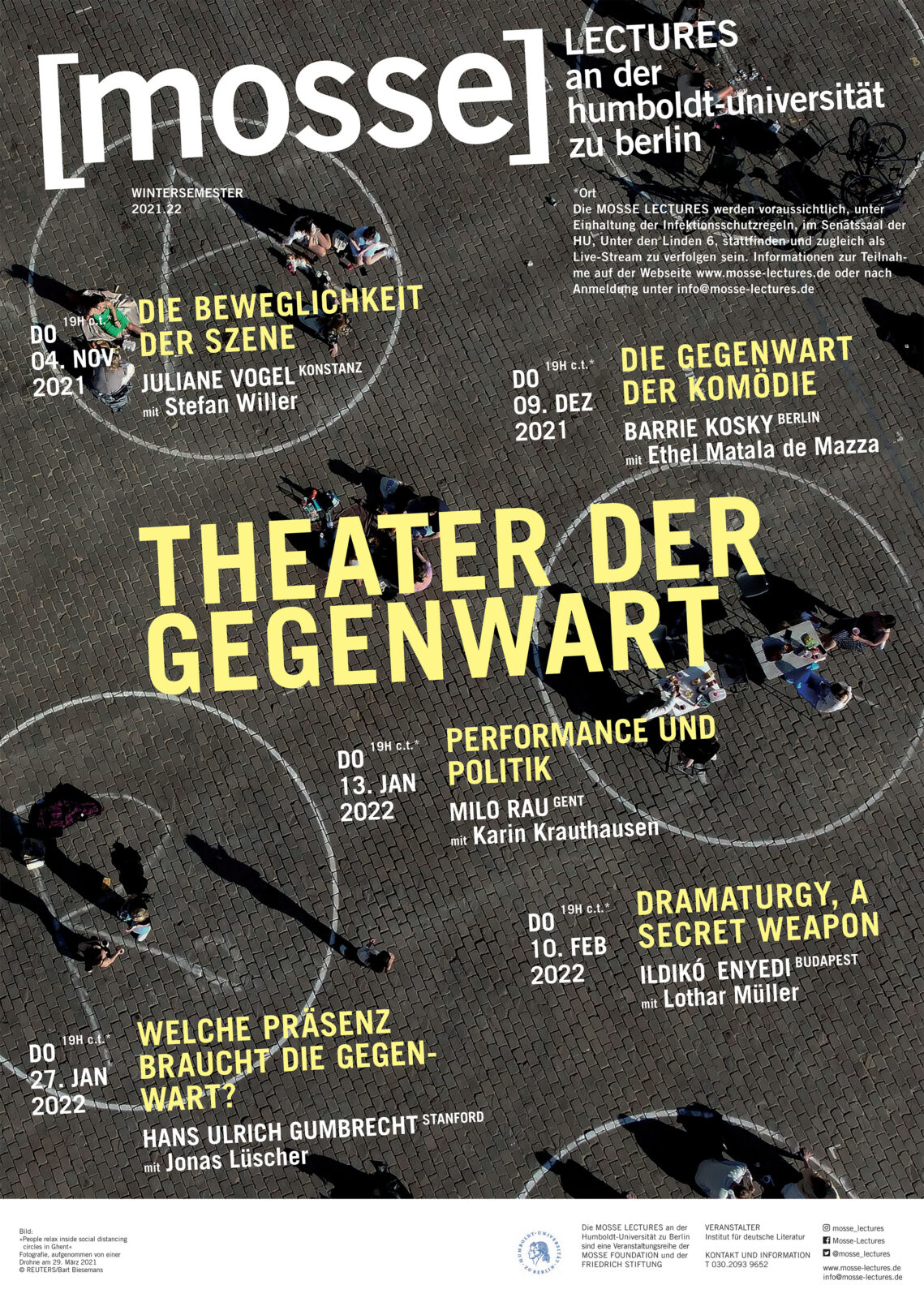
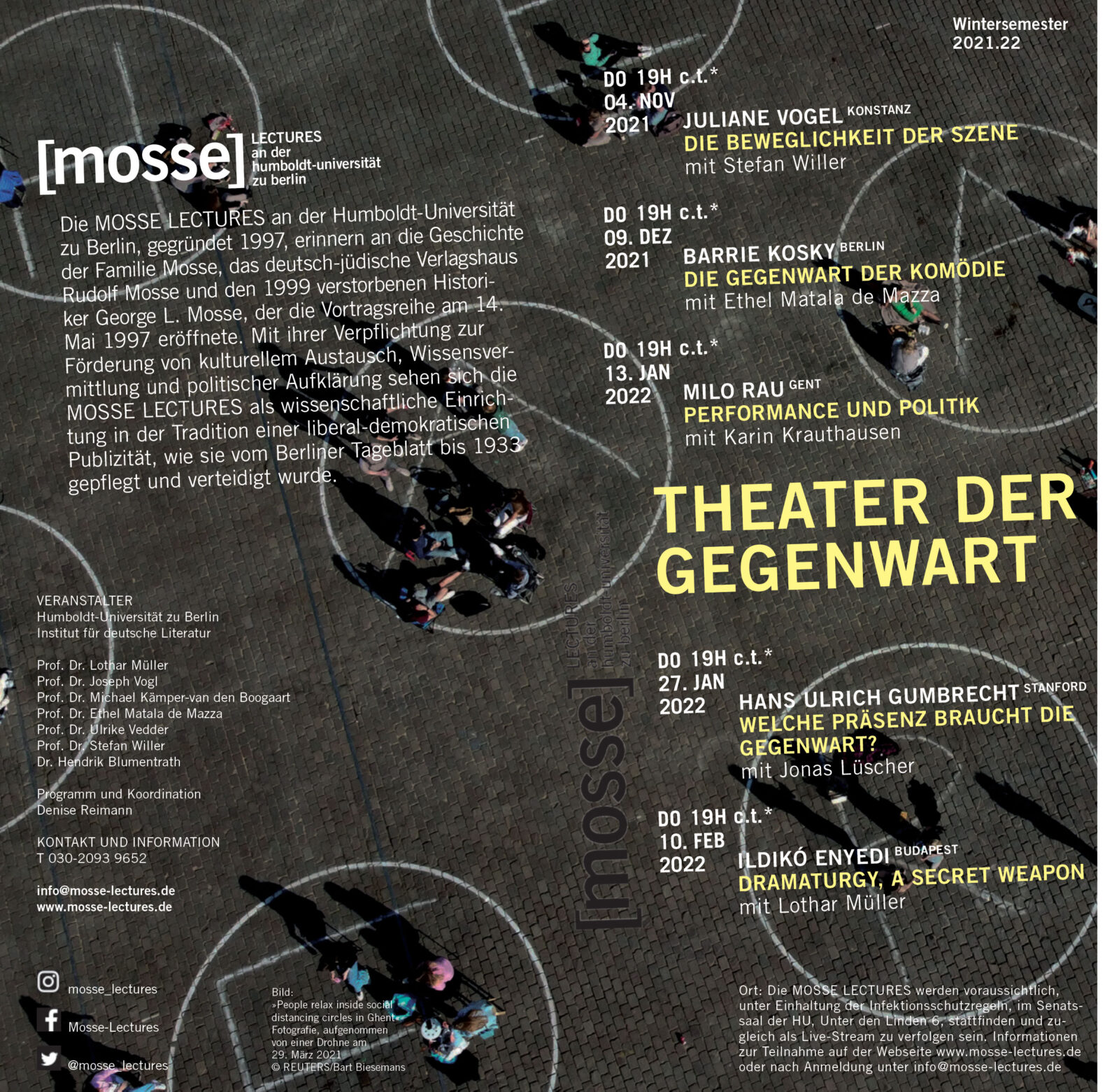
Senatssaal of Humboldt University
Unter den Linden 6
1. Stock
10117 Berlin
GERMANY
Sponsored by:
[mosse] LECTURES an der humboldt-universität zu berlin
The Mosse Foundation
Global Mosse Lecture Series
Institut für deutsche Literatur
Humboldt University
Moderator: Lothar Müller (Humboldt University)
Lecture Description: During the autumn of 2020 a 72 days long complex theatrical performance took place in the heart of Budapest with various important side events over the whole country. On the 31st of August the University of Theatre and Film Arts of Budapest (SZFE) was deprived of its academic autonomy. As an answer, at midnight the students occupied the University. 72 days later the siege had to be stopped because of the covid situation but it led to the founding of the FREESZFE association, a creative hub for learning and creating. If we compare these 72 days with other, historic examples of University occupations, we find one striking difference. These young professionals – actors, directors, writers, dramaturges etc. – expressed their protest and articulated their principles with an extremely rich and varied use of the tools of their profession. The occupation as a whole became a highly dramatized art project and each one of the many performances and events created pure theatrical time and space for all our senses where the driving force, the motor behind was dramaturgic: to define the authentic narrative of what was happening with their Alma Mater and what they were fighting for.
Lecture Series Theme: “Theater der Gegenwart”/”Staging the Present”
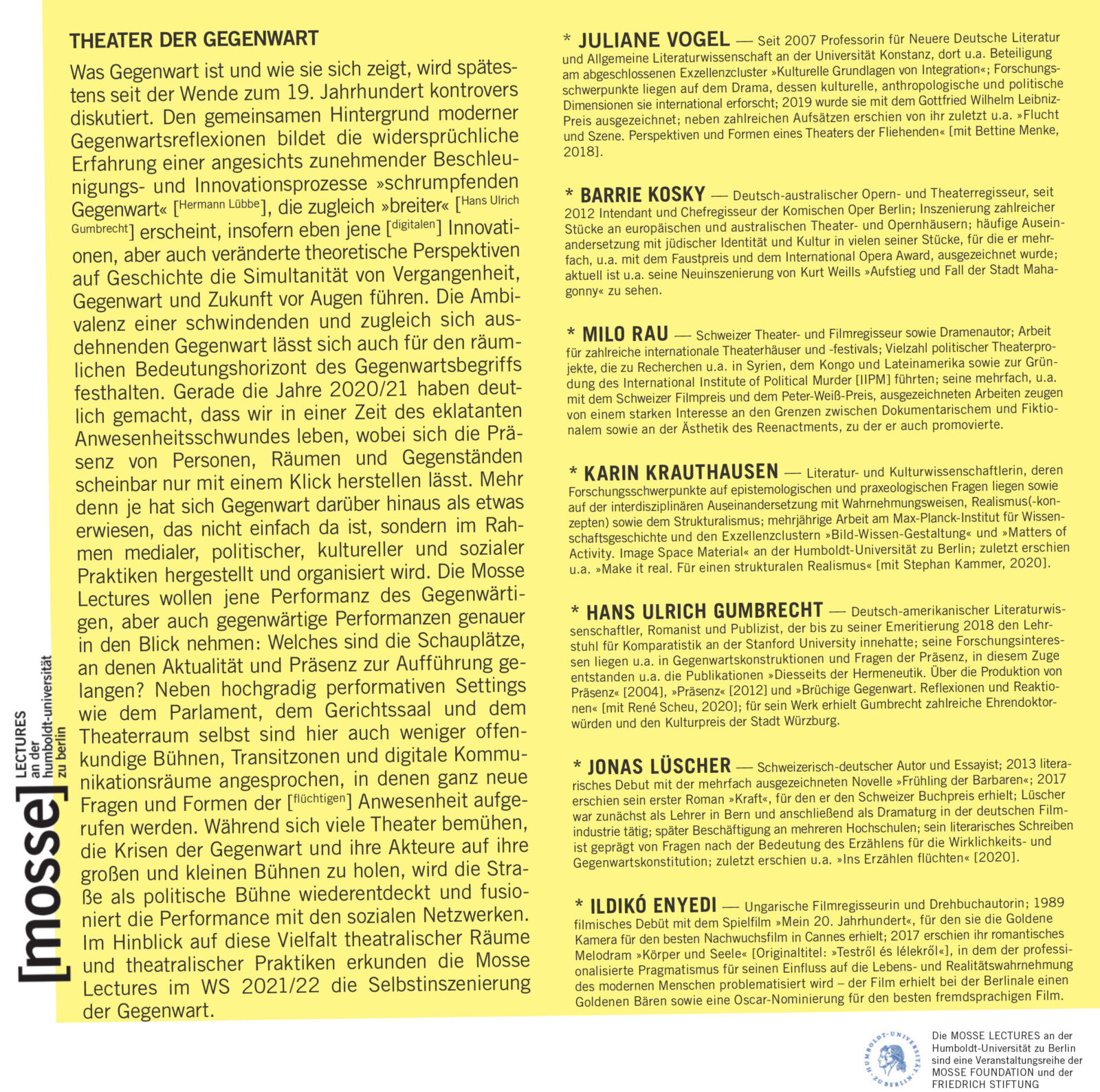
Lecture Series Description: Was Gegenwart ist und wie sie sich zeigt, wird spätestens seit der Wende zum 19. Jahrhundert kontrovers diskutiert. Den gemeinsamen Hintergrund moderner Gegenwartsreflexionen bildet die widersprüchliche Erfahrung einer angesichts zunehmender Beschleunigungs- und Innovationsprozesse „schrumpfenden Gegenwart“ (Hermann Lübbe), die zugleich „breiter“ (Hans Ulrich Gumbrecht) erscheint, insofern eben jene (digitalen) Innovationen, aber auch veränderte theoretische Perspektiven auf Geschichte die Simultanität von Vergangenheit, Gegenwart und Zukunft vor Augen führen. Die Ambivalenz einer schwindenden und zugleich sich ausdehnenden Gegenwart lässt sich auch für den räumlichen Bedeutungshorizont des Gegenwartsbegriffs festhalten. Gerade die Jahre 2020 und 2021 haben deutlich gemacht, dass wir in einer Zeit des eklatanten Anwesenheitsschwundes leben, wobei sich die Präsenz von Personen, Räumen und Gegenständen scheinbar nur mit einem Klick herstellen lässt. Mehr denn je hat sich Gegenwart darüber hinaus als etwas erwiesen, das nicht einfach da ist, sondern im Rahmen medialer, politischer, kultureller und sozialer Praktiken hergestellt und organisiert wird. Die Mosse Lectures wollen jene Performanz des Gegenwärtigen, aber auch gegenwärtige Performanzen genauer in den Blick nehmen: Welches sind die Schauplätze, an denen Aktualität und Präsenz zur Aufführung gelangen? Neben hochgradig performativen Settings wie dem Parlament, dem Gerichtssaal und dem Theaterraum selbst sind hier auch weniger offenkundige Bühnen, Transitzonen und digitale Kommunikationsräume angesprochen, in denen ganz neue Fragen und Formen der (flüchtigen) Anwesenheit aufgerufen werden. Während sich viele Theater bemühen, die Krisen der Gegenwart und ihre Akteure auf ihre großen und kleinen Bühnen zu holen, wird die Straße als politische Bühne wiederentdeckt und fusioniert die Performance mit den sozialen Netzwerken. Im Hinblick auf diese Vielfalt theatralischer Räume und theatralischer Praktiken erkunden die Mosse Lectures im WS 2021/22 die Selbstinszenierung der Gegenwart.
What the present is and how it manifests itself has been controversially discussed since at least the turn of the 19th century. The common background of modern reflections on the present consists in a paradoxical experience: Although increasing processes of acceleration and innovation create the impression of a “shrinking present” (Hermann Lübbe), it seems that the present at the same time becomes “broader” (Hans Ulrich Gumbrecht) insofar as precisely those (digital) innovations, but also new theoretical perspectives on history, demonstrate the simultaneity of past, present and future.
This ambivalence of a dwindling and at the same time expanding present also applies to the spatial dimension of the concept of present. The year 2020 in particular has made it clear that we live in an era of a of shrinking physical presence, whereas the virtual presence of people, spaces, and objects is seemingly just a click away. More than ever the present has proven to be something that is not simply there, but is produced and organized within the framework of media, political, cultural, and social practices. The Mosse Lectures intend to take a closer look at this performance of the present, but also at present performances: In which venues do topicality and presence come to performance? Along with highly performative settings such as the parliament, a courtroom, and the theater itself, less overt stages such as transit zones and spaces of digital communication are also addressed here, in which entirely new questions and forms of ephemeral presence are invoked. While many theaters strive to bring the crises of the present and their actors onto their large and small stages, the street is being rediscovered as a political stage, fusig performance with social networks. In light of this diversity of theatrical spaces and theatrical practices, the Mosse Lectures in theupcoming winter semester 2021/22 explore the self-staging of the present.
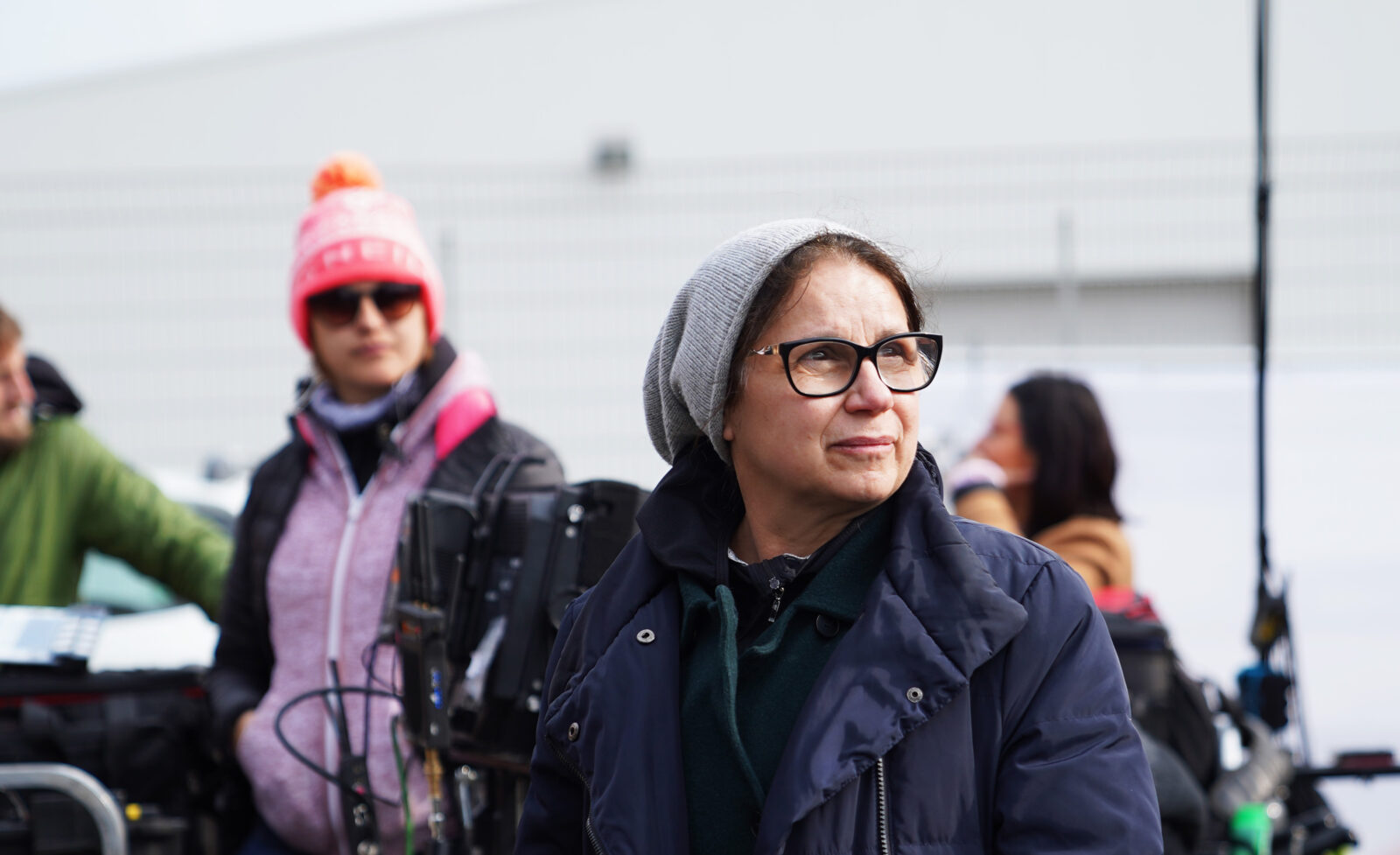
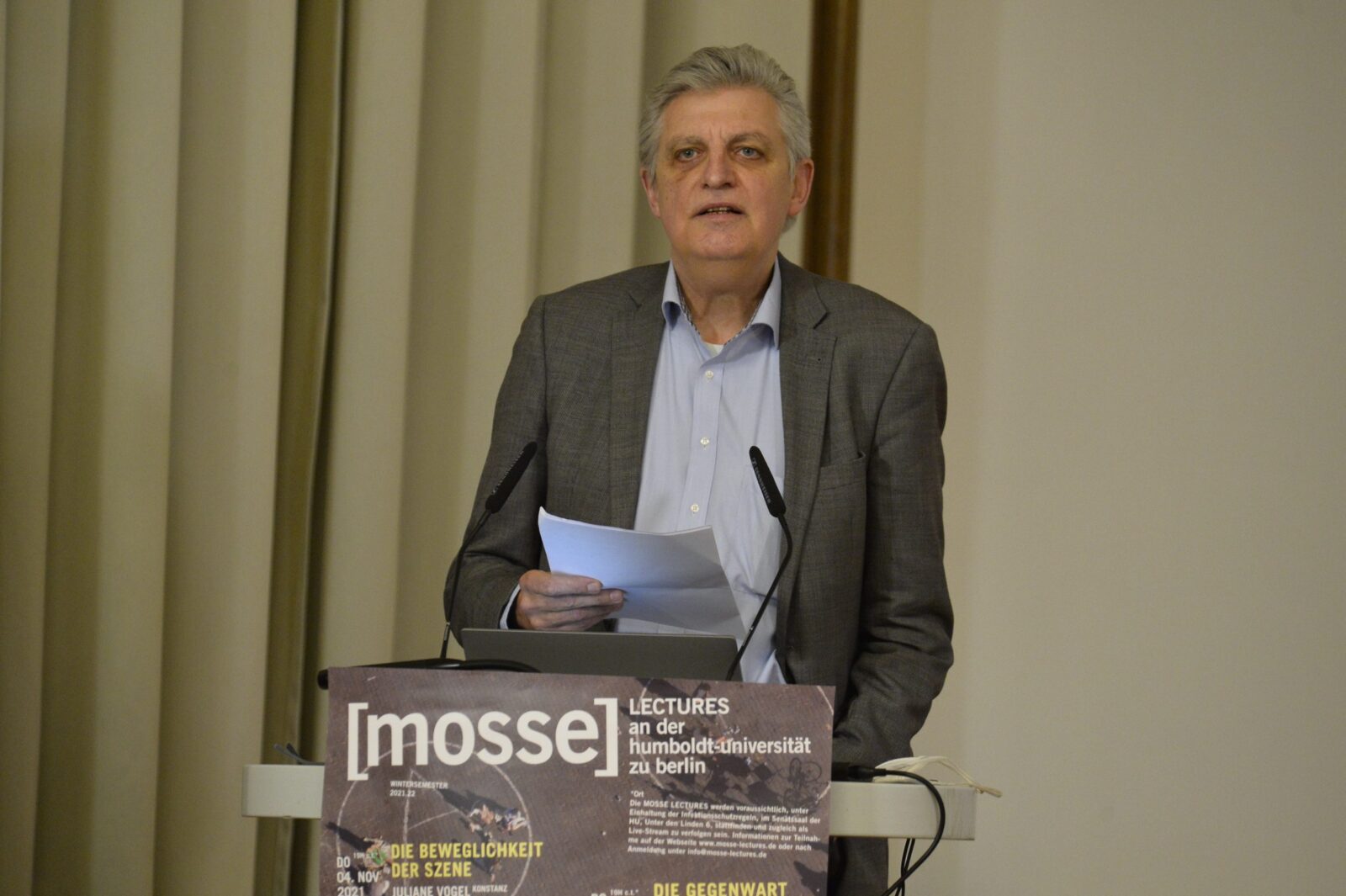
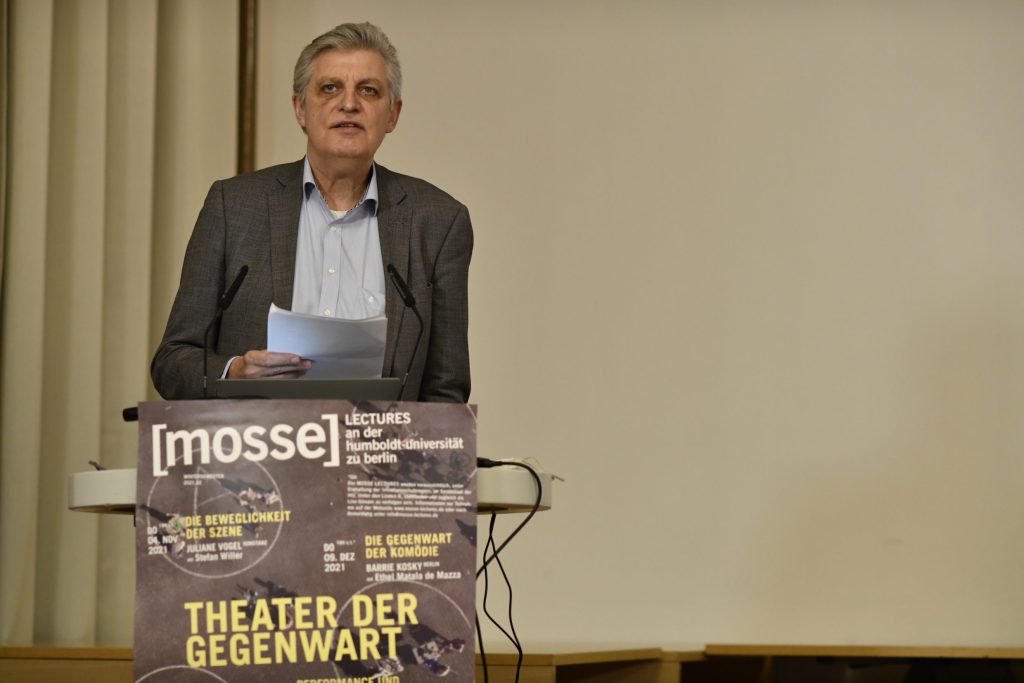
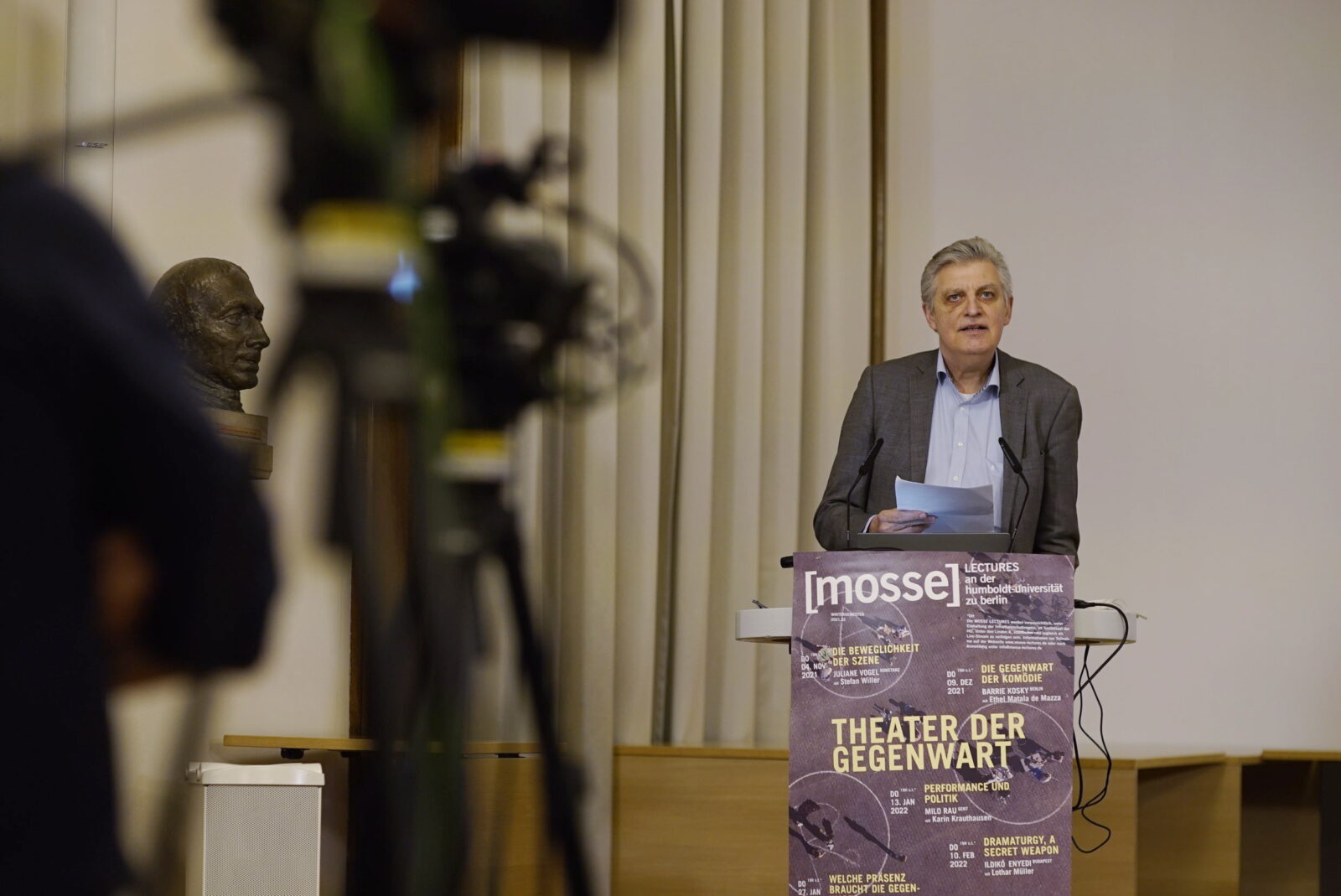
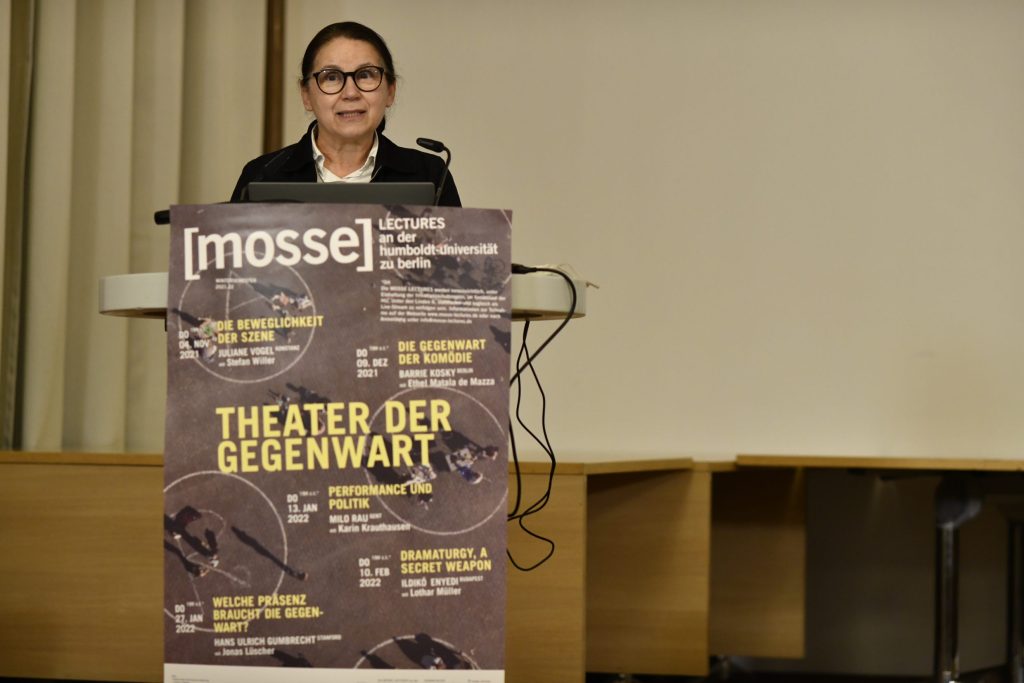
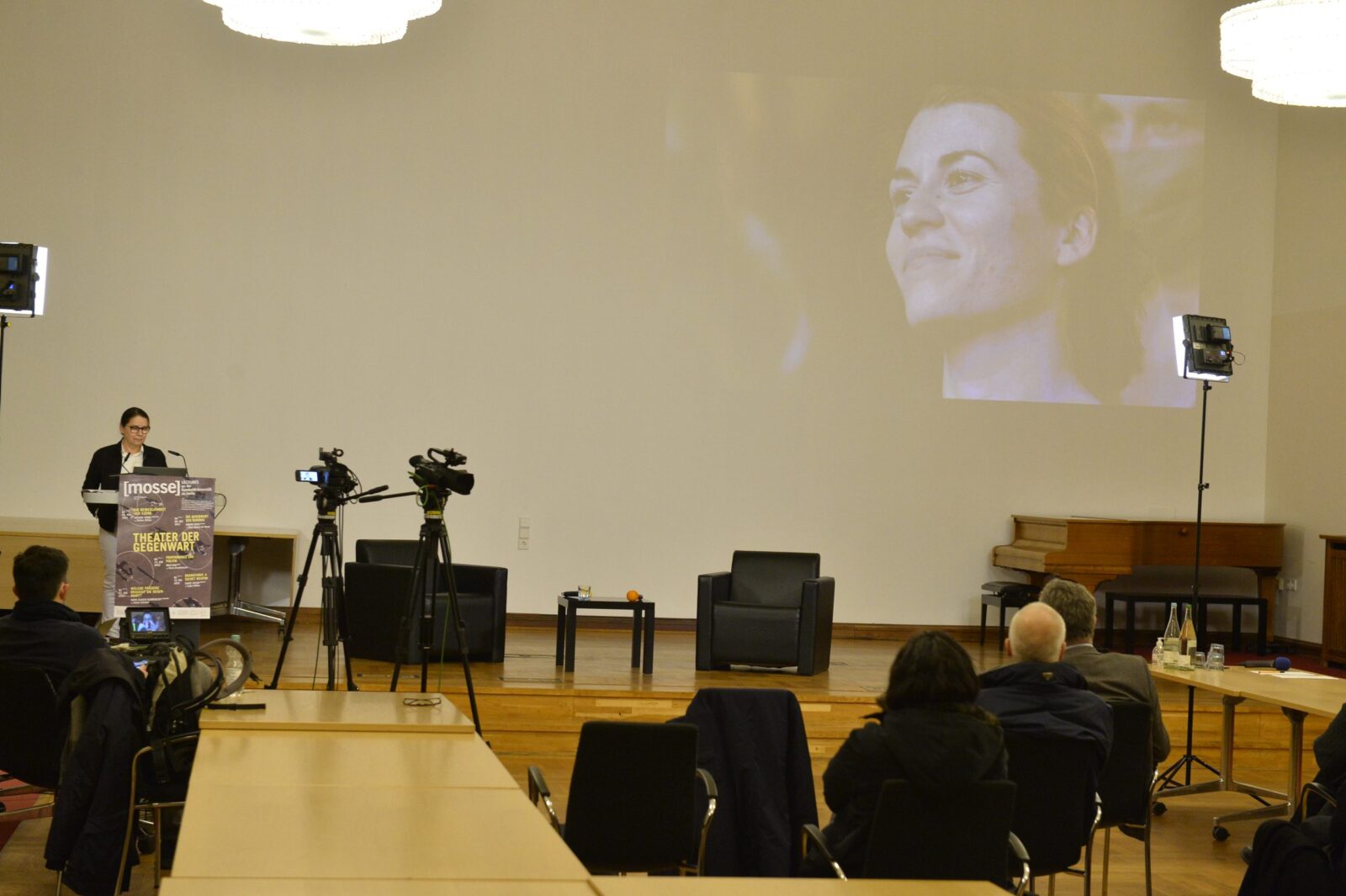
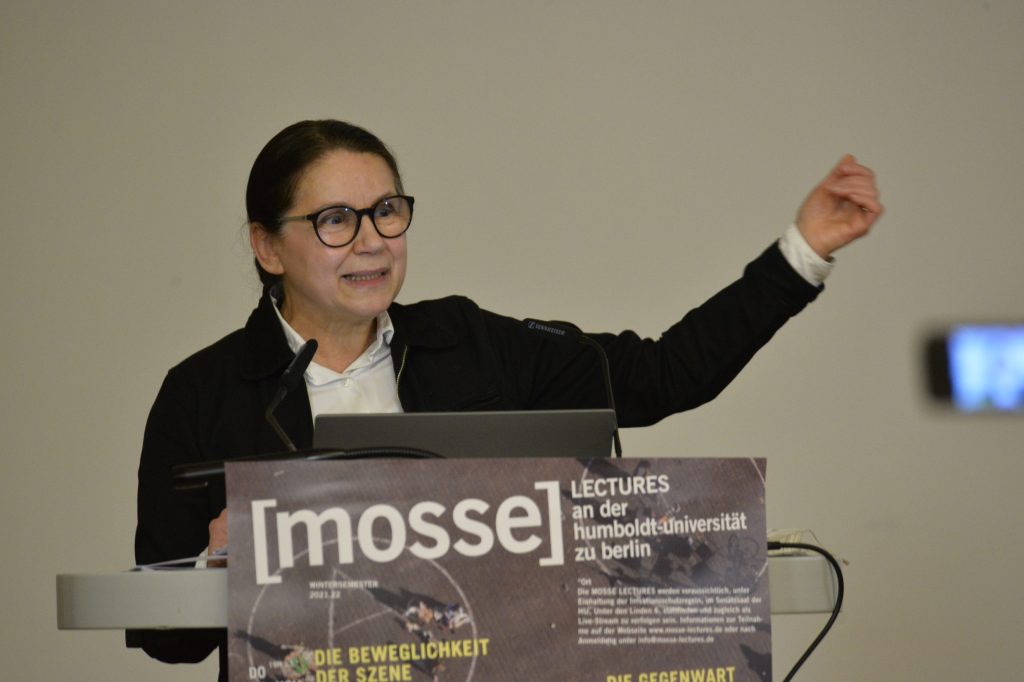
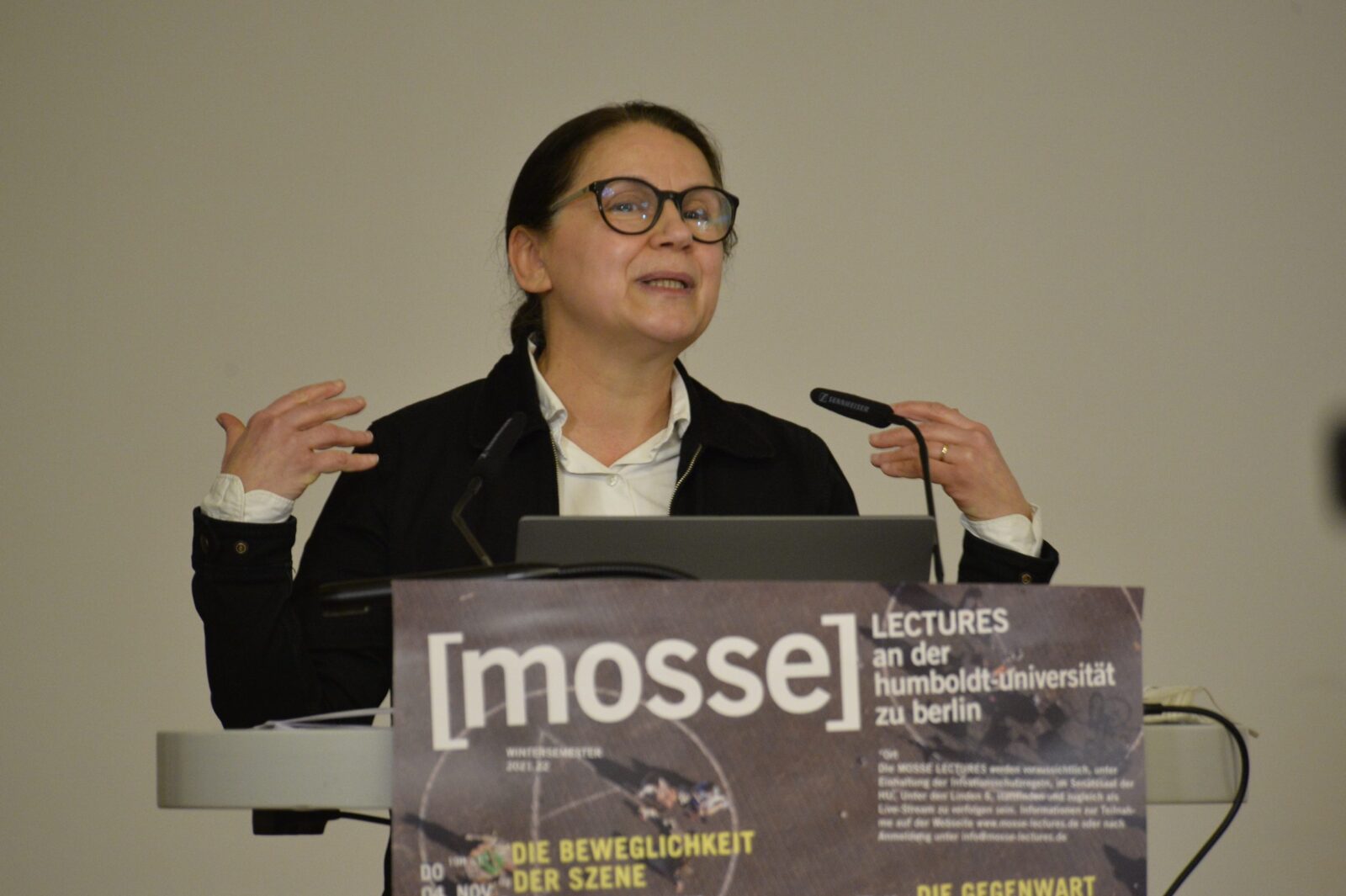
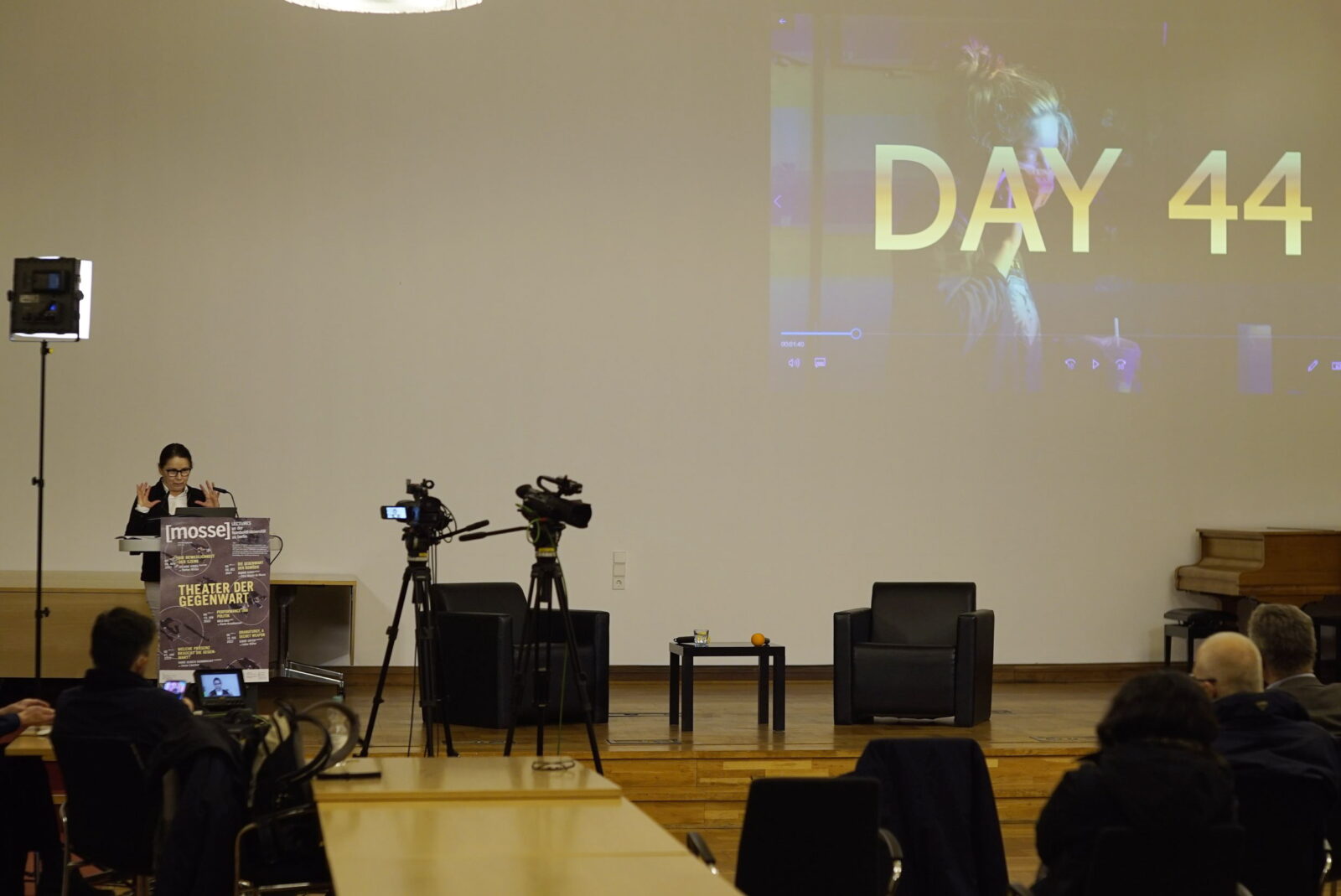
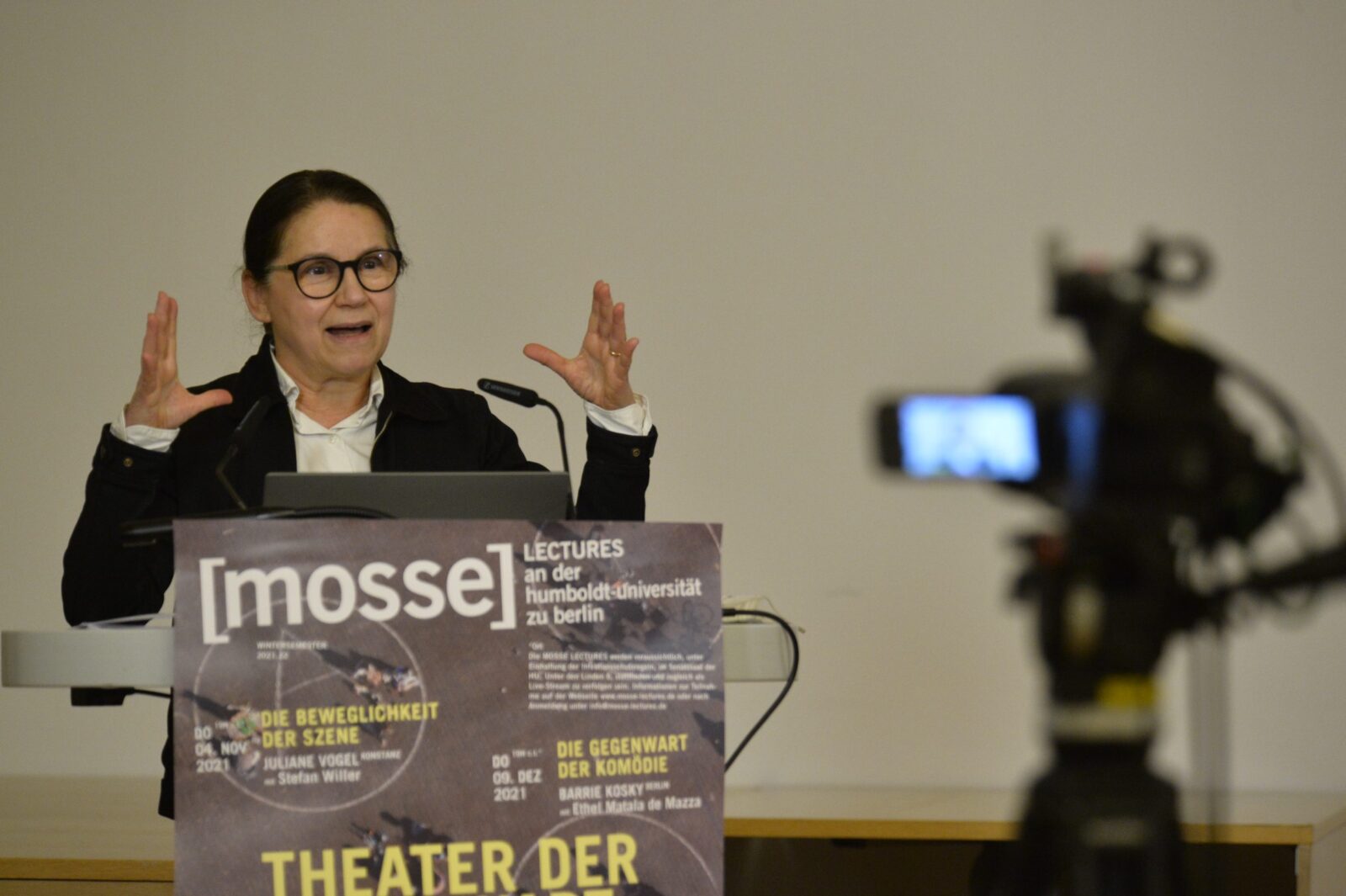
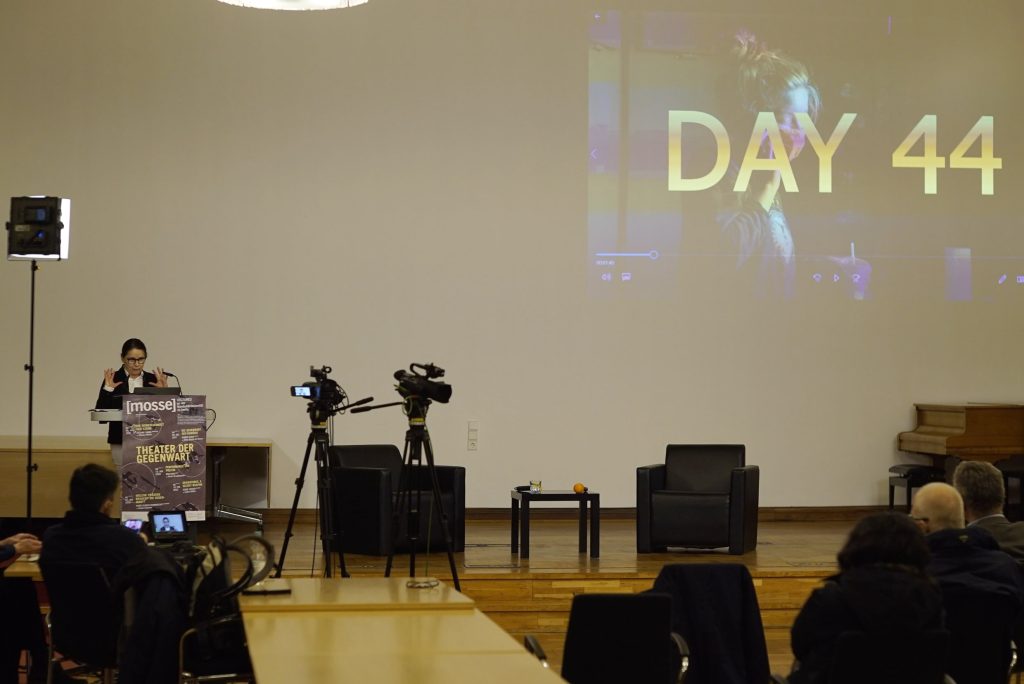
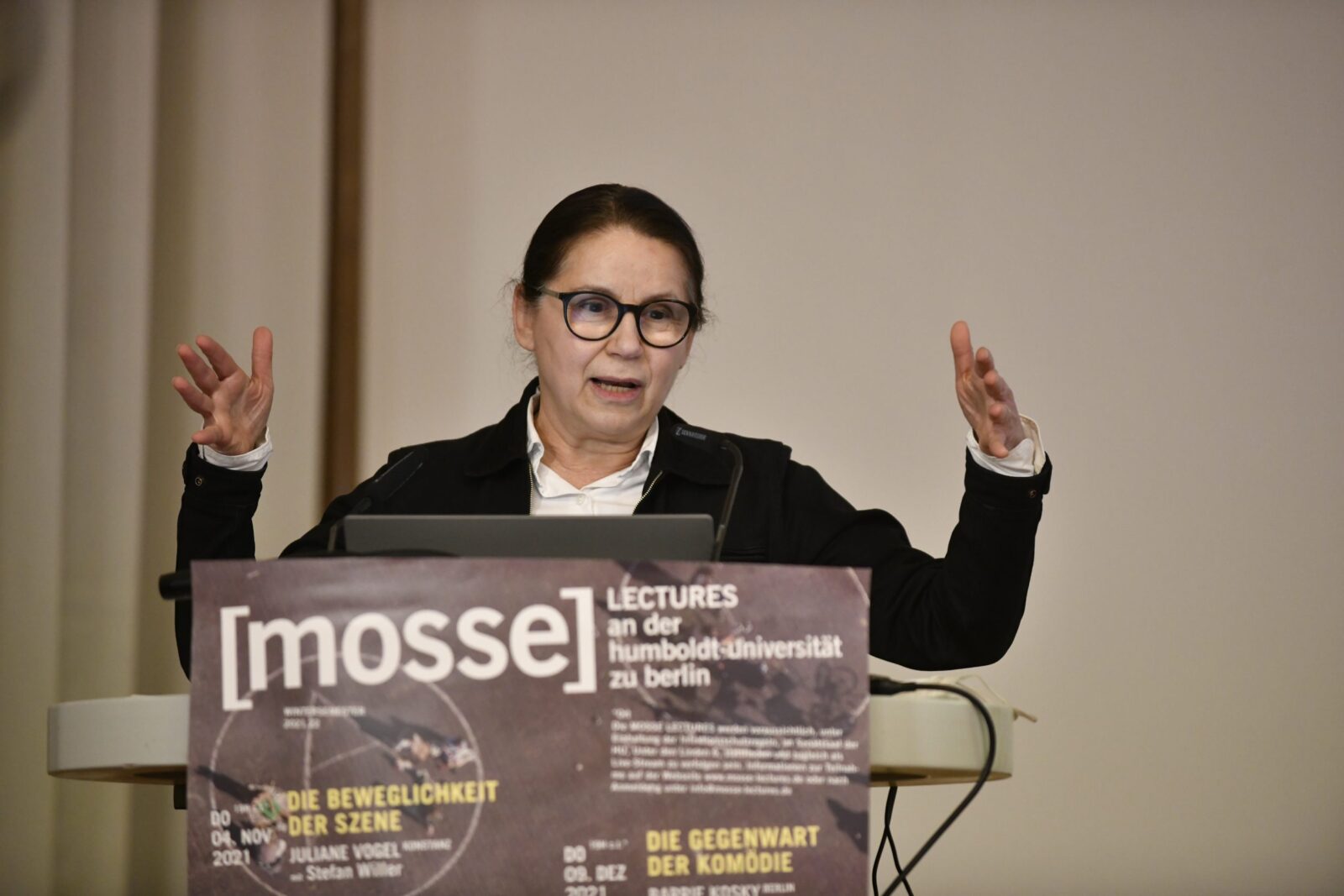
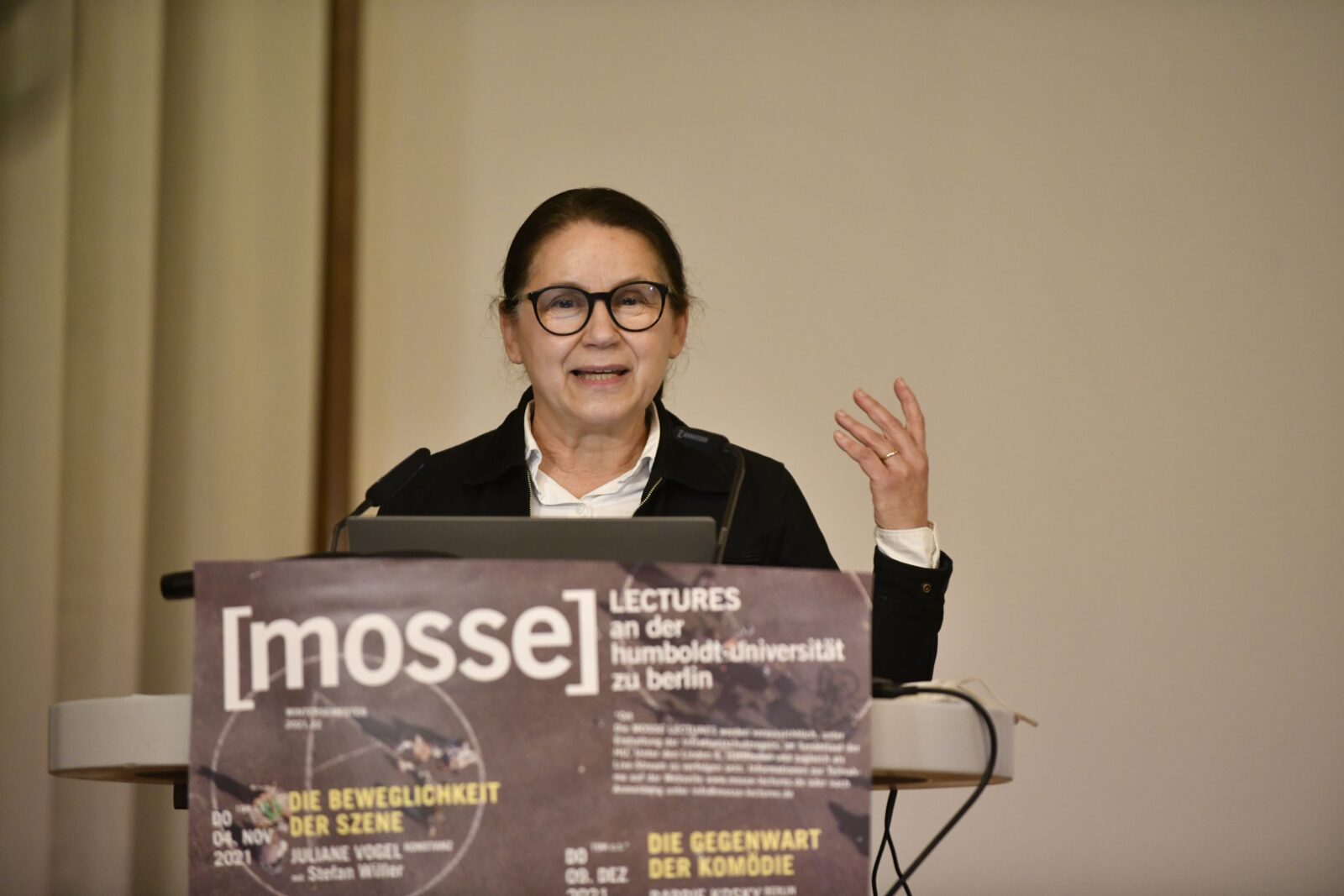
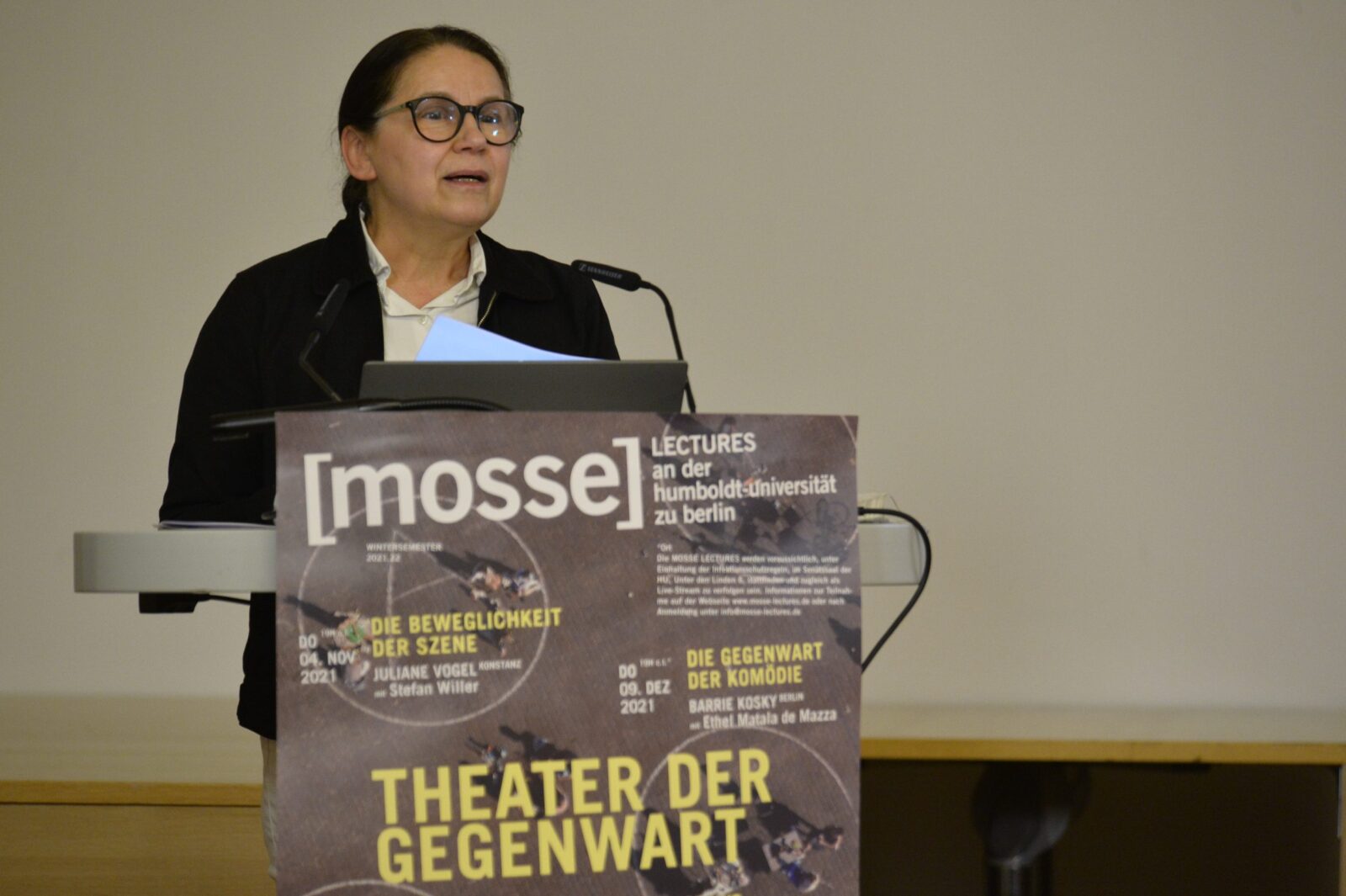
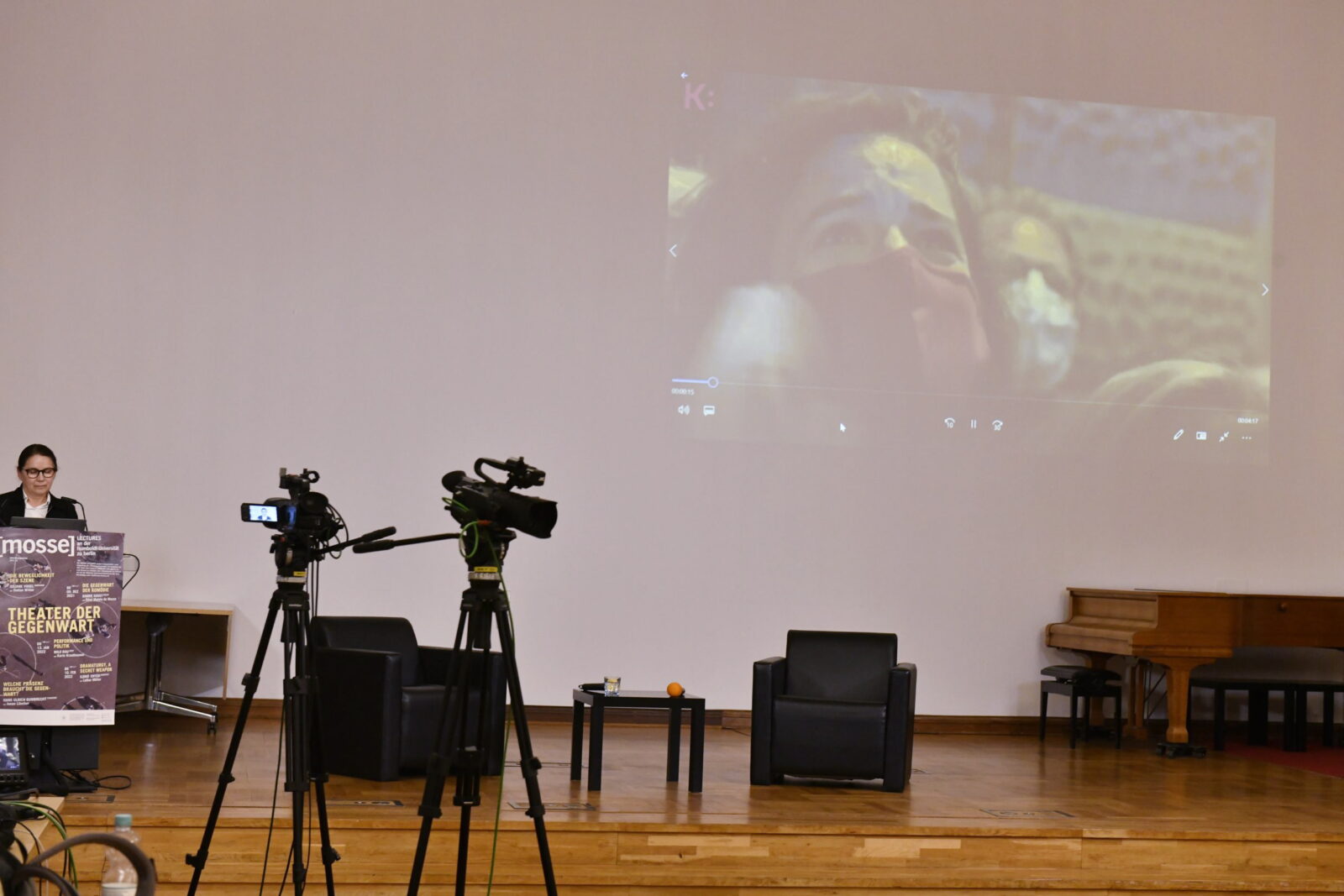
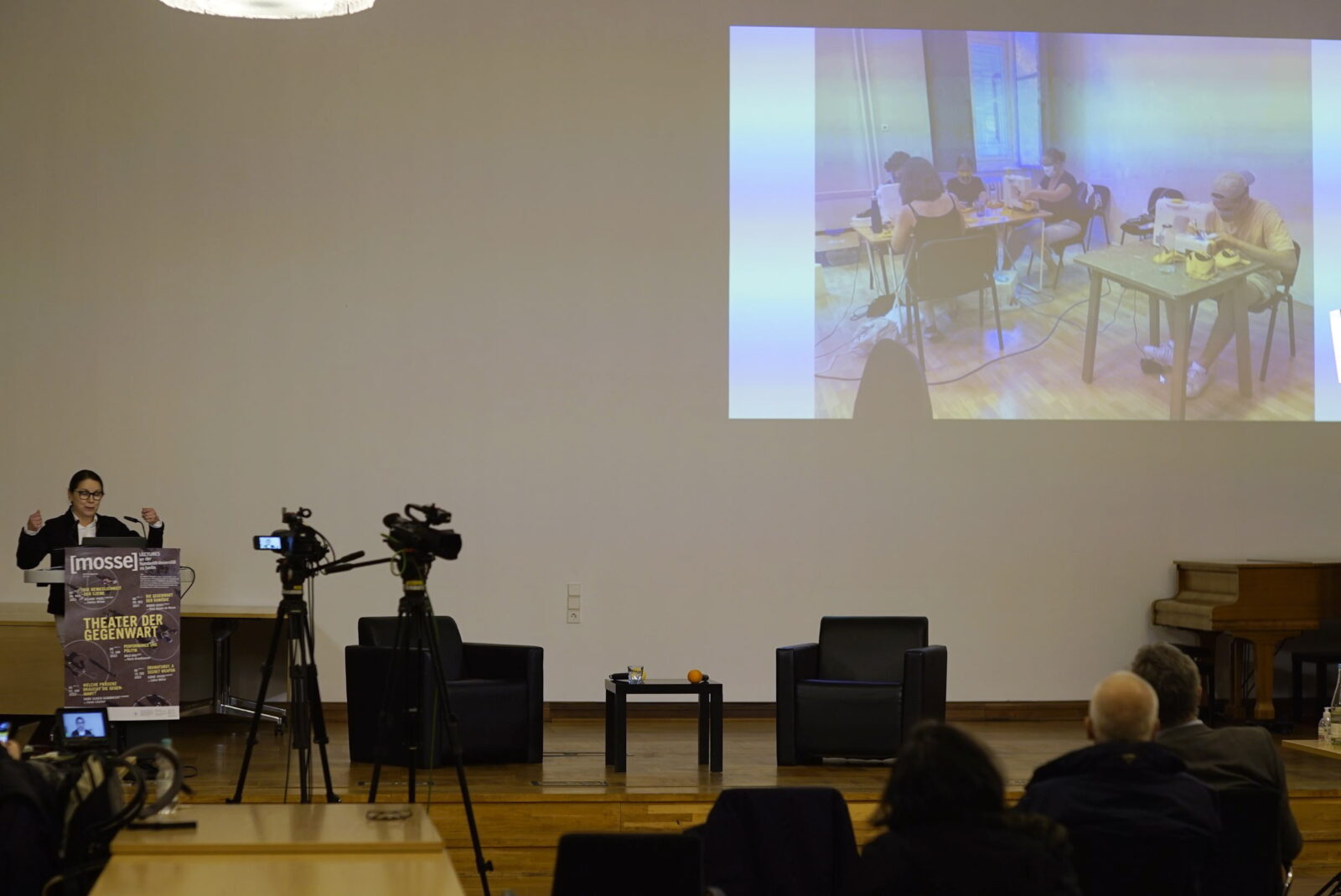
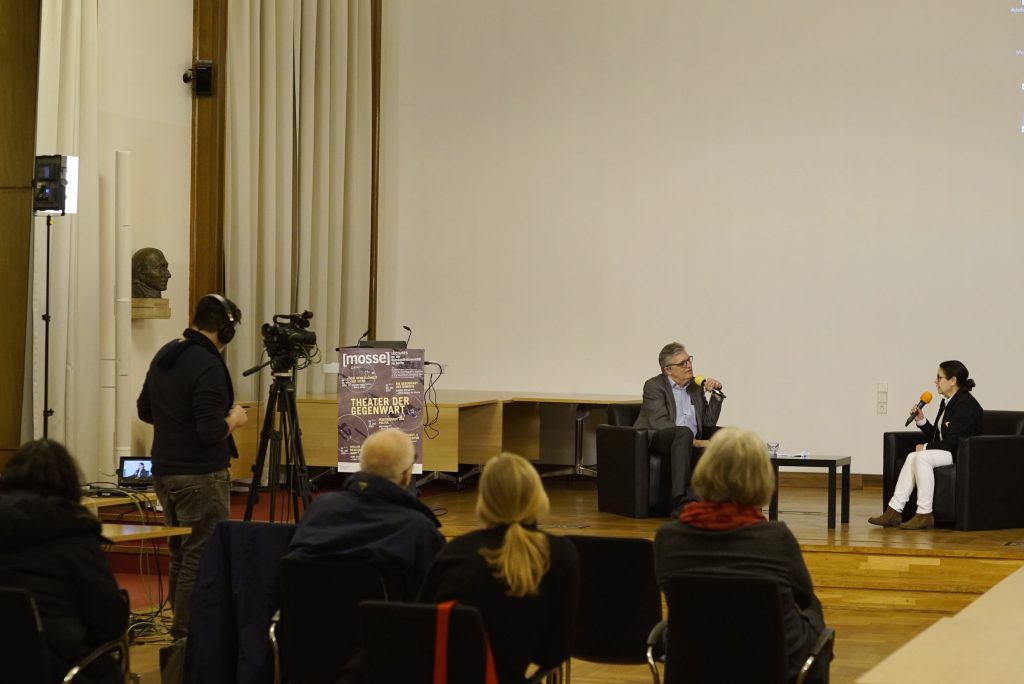
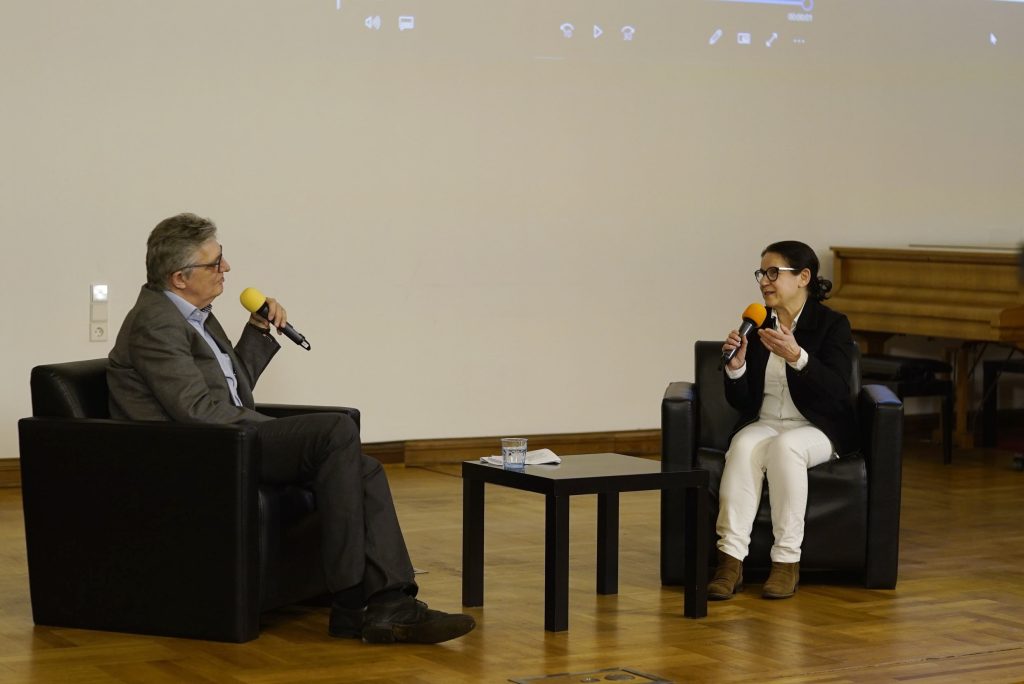
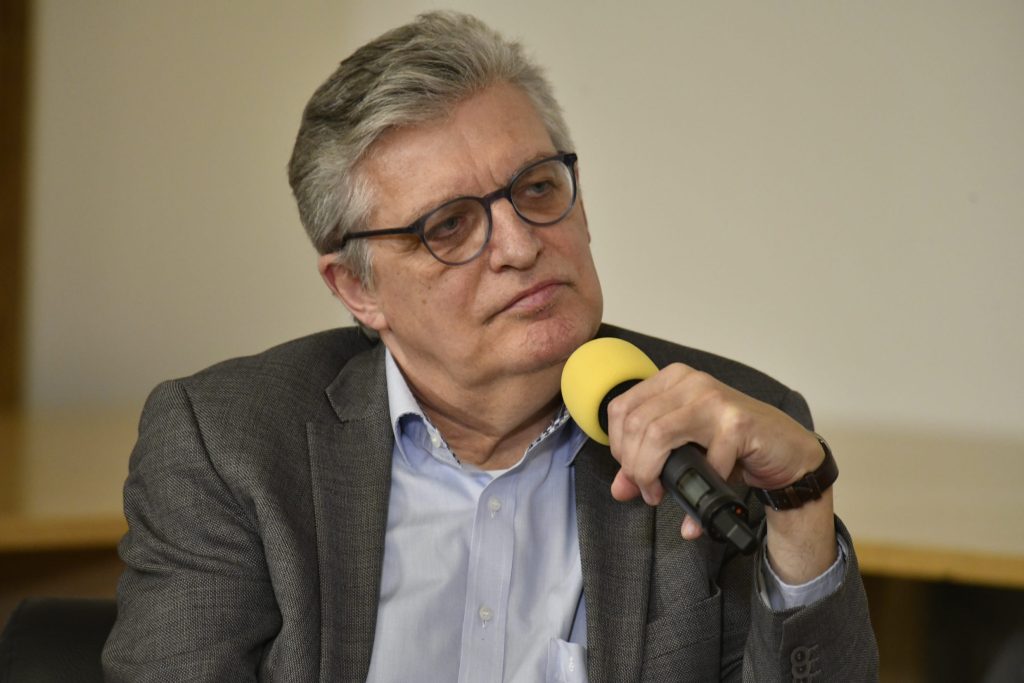
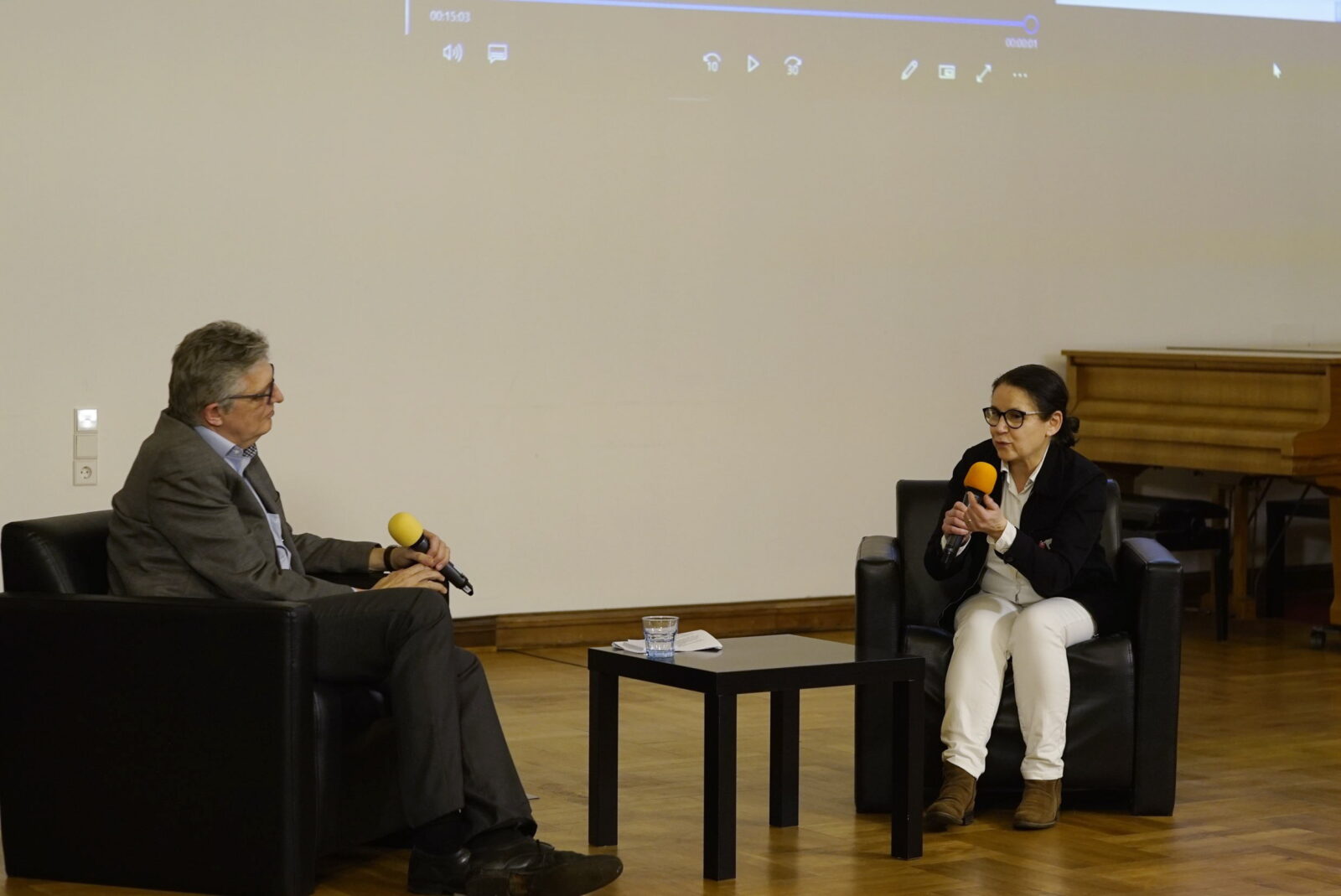
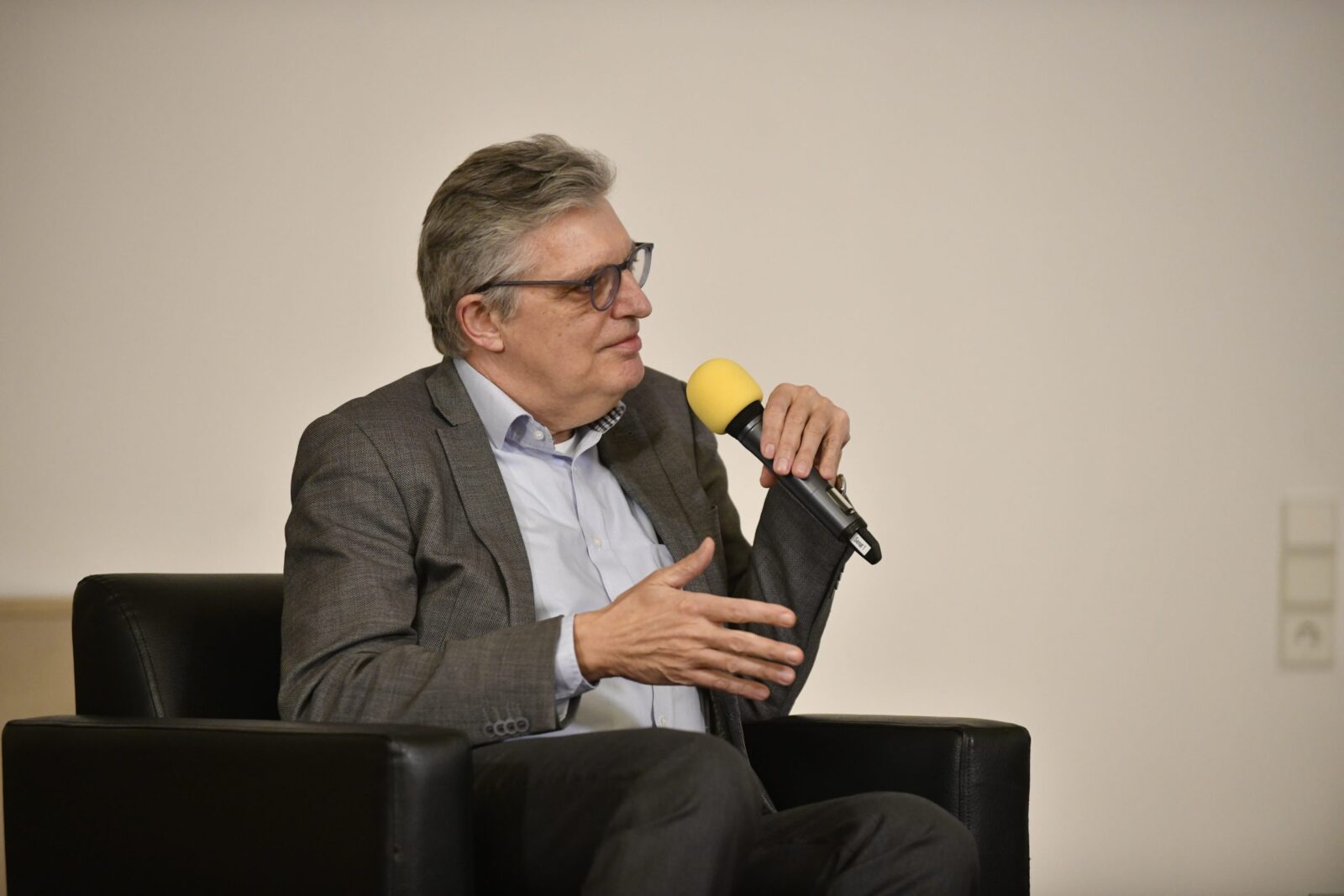
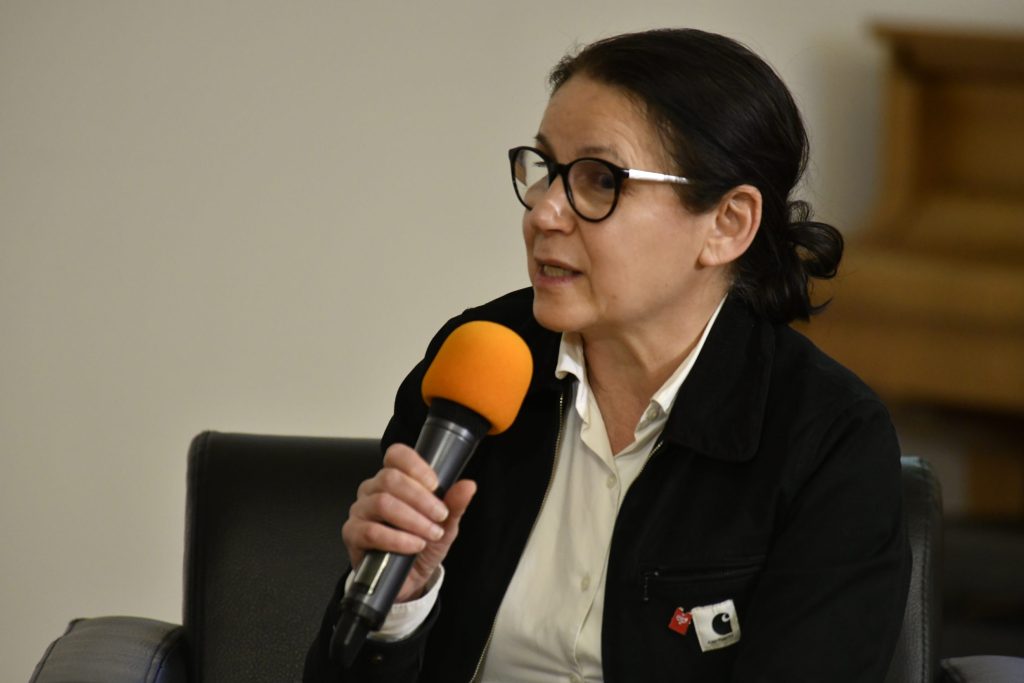
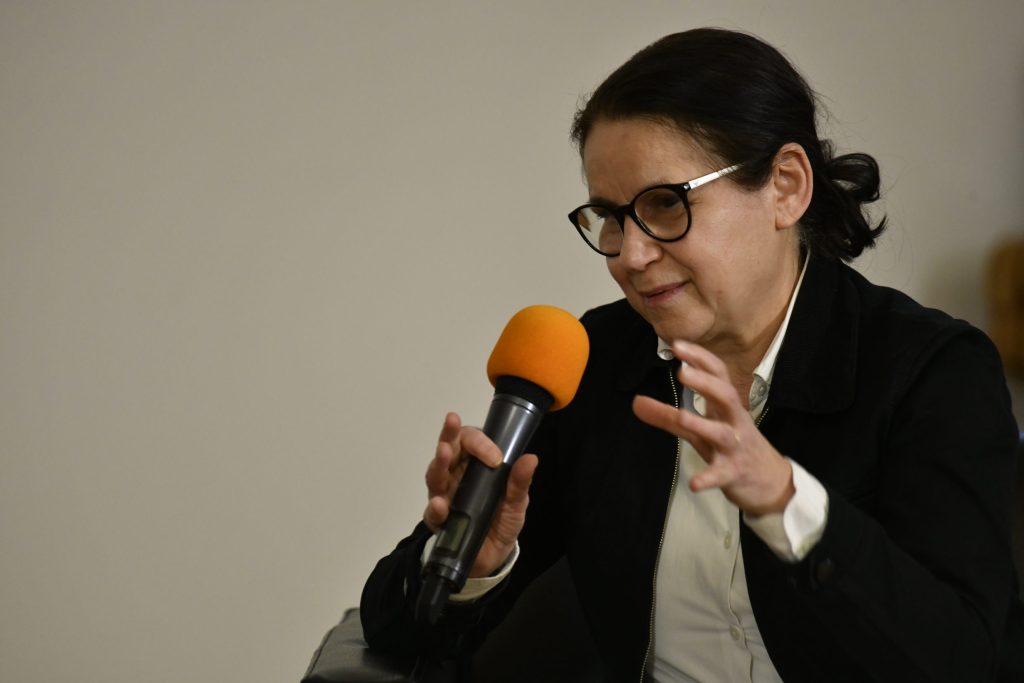
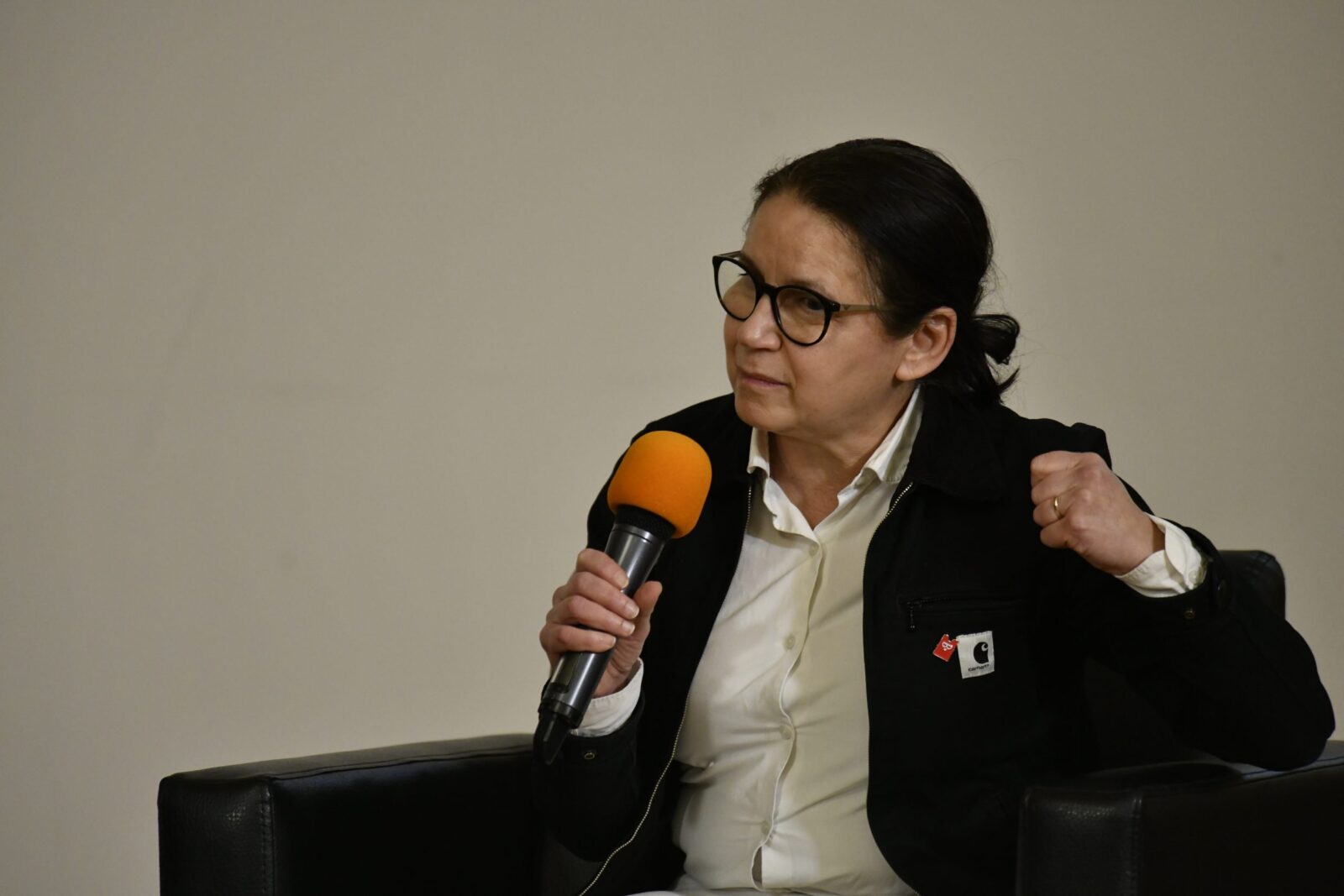
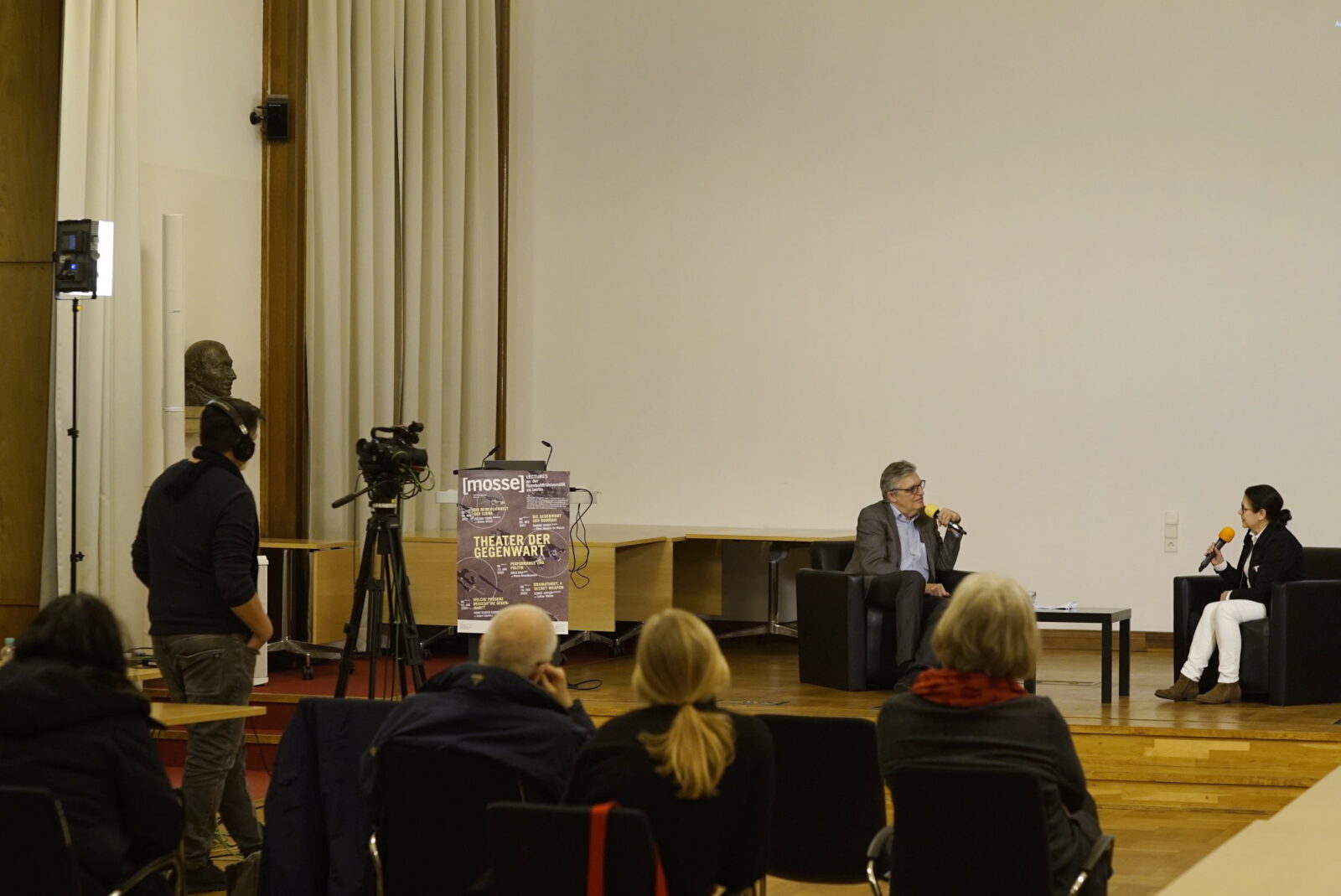
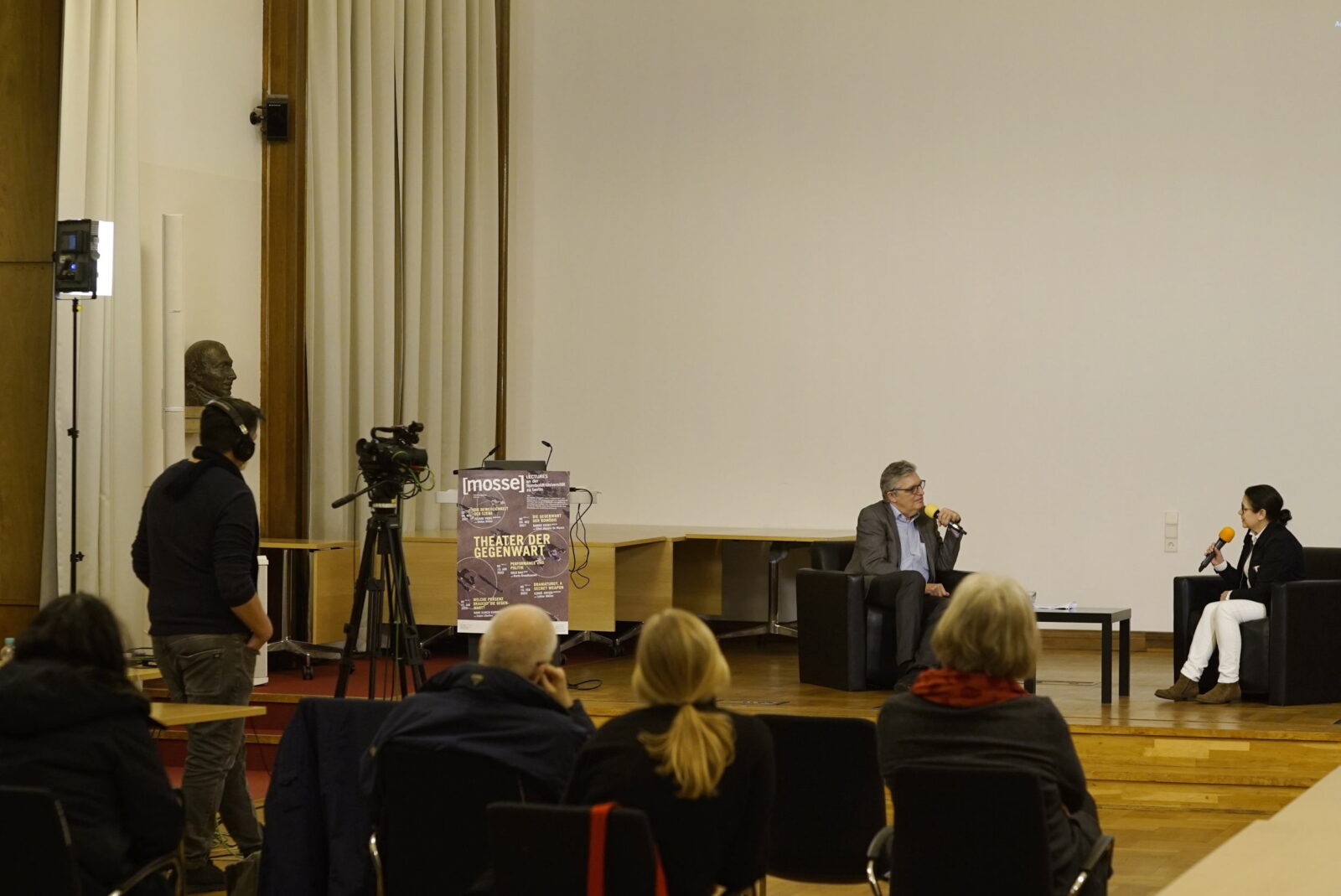
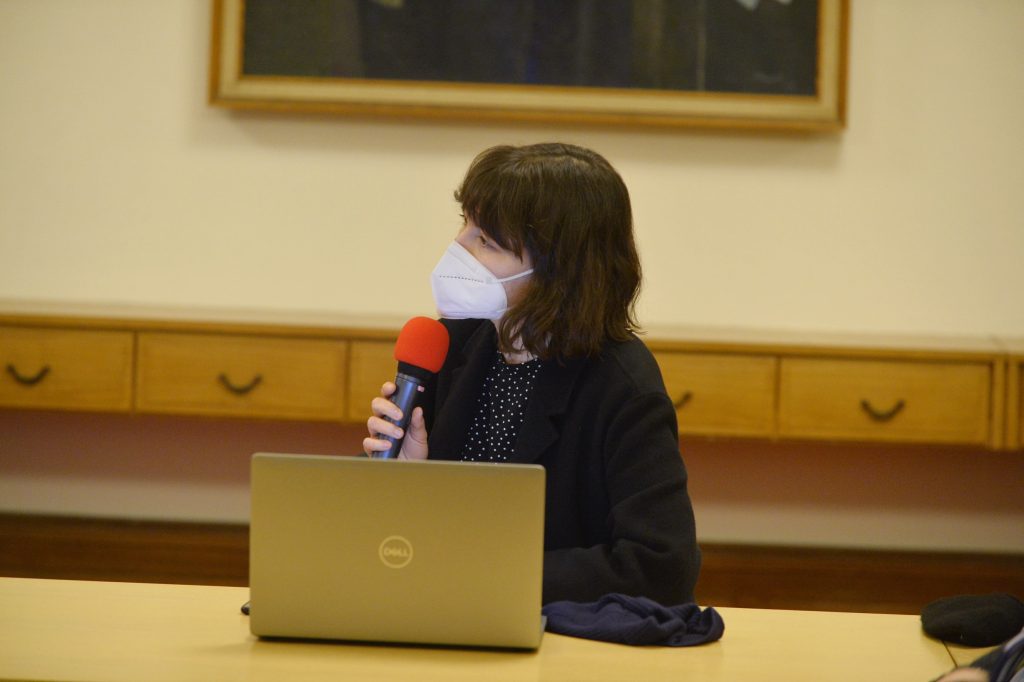
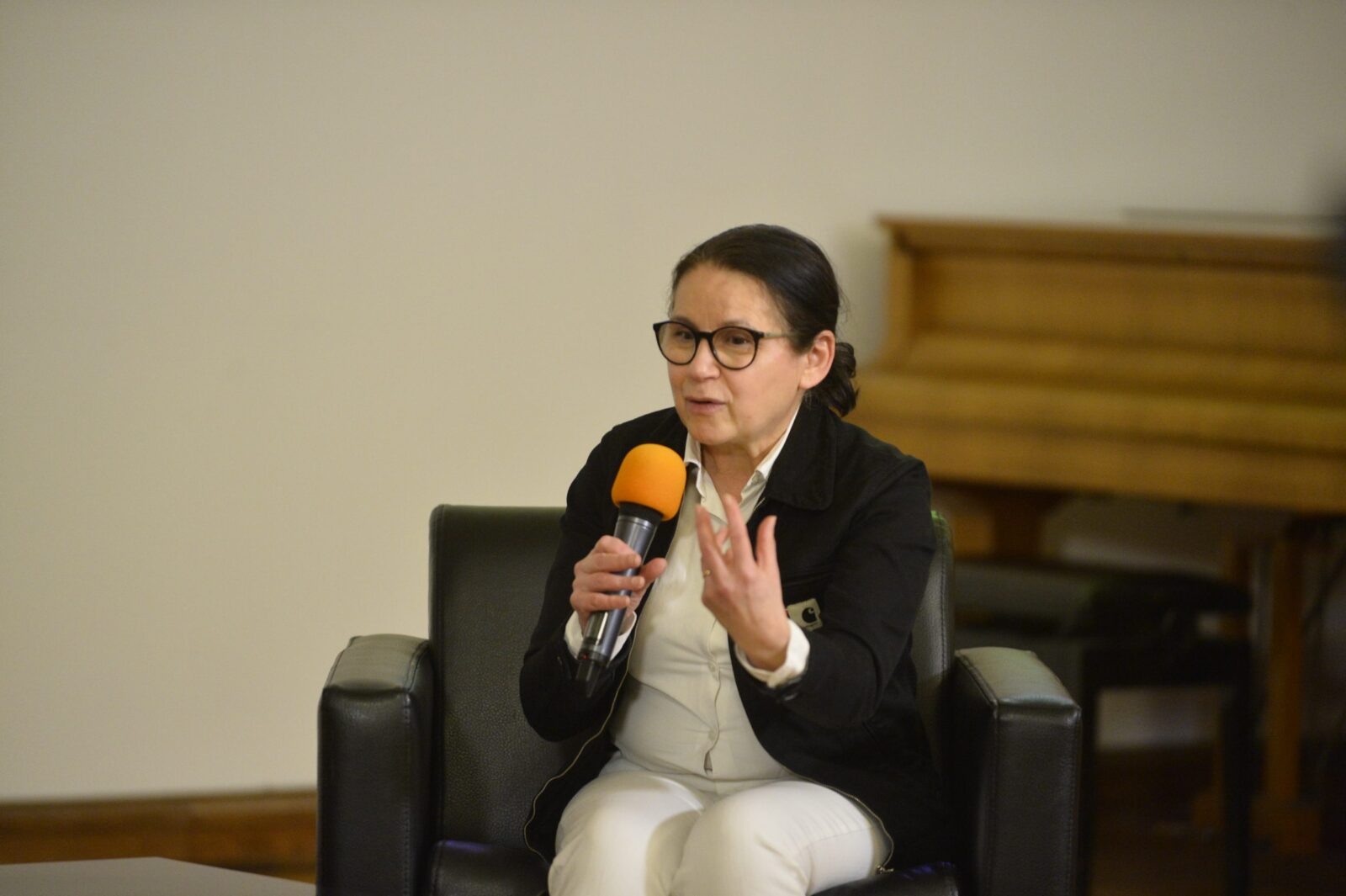
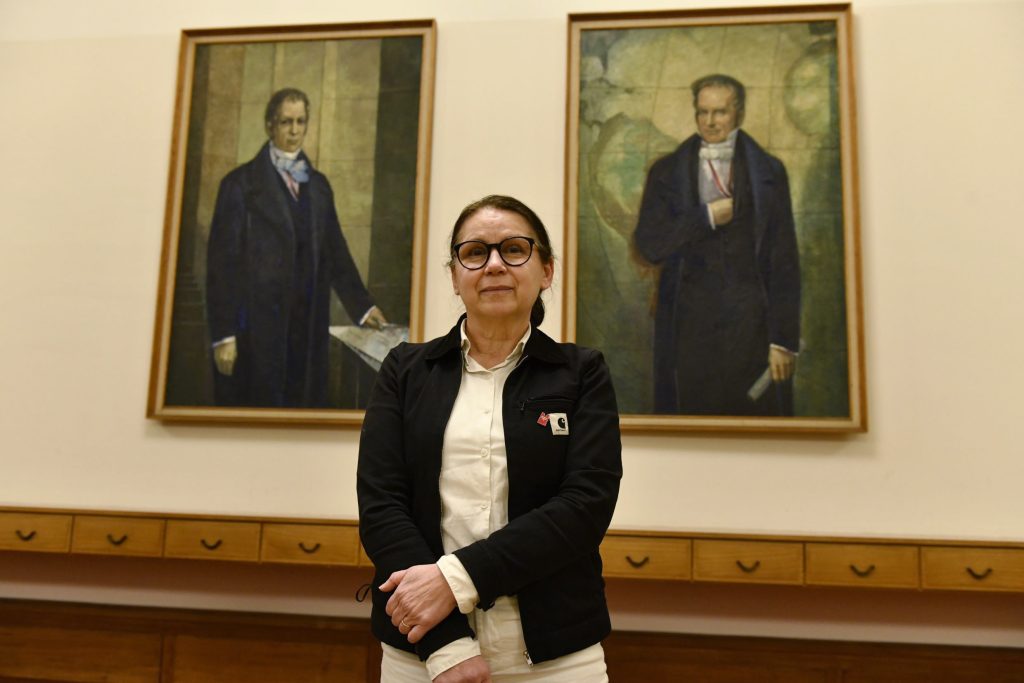
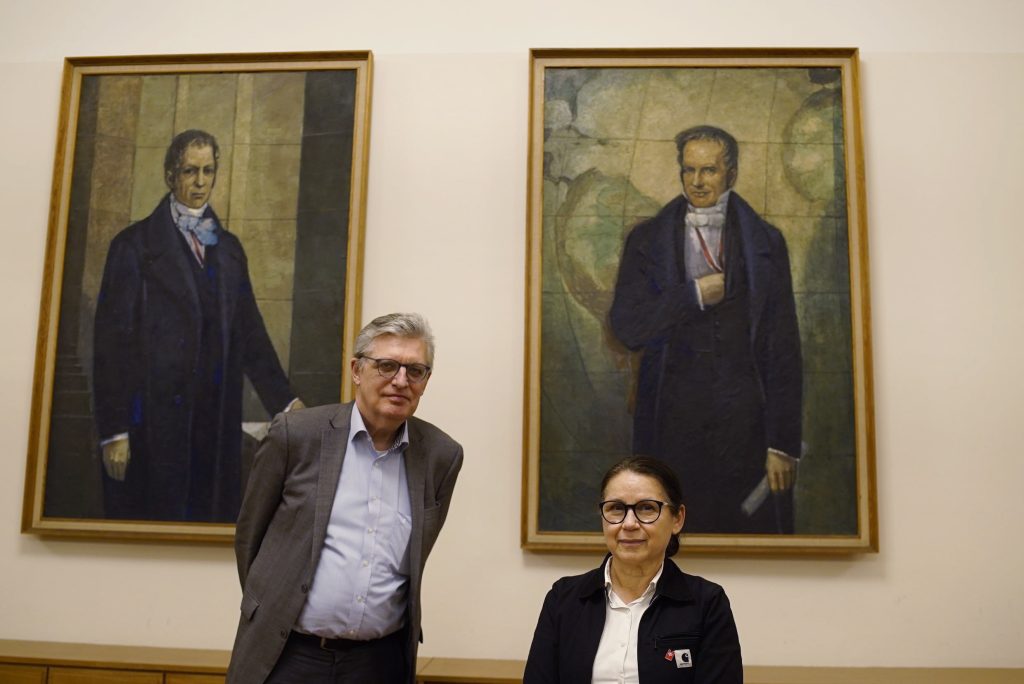
Photo credit: Niels Leiser for the Mosse Lectures
Ildikó Enyedi: Ildikó Enyedi ist eine ungarische Filmregisseurin und Drehbuchautorin; 1989 filmisches Debüt mit dem Spielfilm Mein 20. Jahrhundert, für den sie die Goldene Kamera für den besten Nachwuchsfilm in Cannes erhielt; 2017 erschien ihr romantisches Melodram Körper und Seele (Originaltitel: Testről és lélekről), in dem der professionalisierte Pragmatismus für seinen Einfluss auf die Lebens- und Realitätswahrnehmung des modernen Menschen problematisiert wird – der Film erhielt bei der Berlinale einen Goldenen Bären sowie eine Oscar-Nominierung für den besten fremdsprachigen Film.
Lothar Müller has worked as an editor for the Frankfurter Allgemeine Zeitung and the Süddeutsche Zeitung, and lectured at the Institute for Comparative Literature at the Free University. Since 2010, he has served as Honorary Professor in the Institute for German Literature at the Humboldt University Berlin. He is the author of numerous publications, including Adrien Proust und sein Sohn Marcel. Beobachter der erkrankten Welt (2021) and Weiße Magie. Die Epoche des Papiers (2012). He was awarded the Berlin Prize for Literary Criticism in 2013.
