
2018: Jan-Werner Müller, “Can Architecture be Democratic?”
Jan-Werner Müller, “Can Architecture be Democratic?”
Berkeley Mosse Lecture
https://mosselectures.wisc.edu/berkeley/
Thursday, 1 March 2018, 16:30 PDT
370 Dwinelle Hall
UC Berkeley
South Dr.
Berkeley, CA 94720
Sponsored by:
Global Mosse Lecture Series
The Mosse Foundation
UC Berkeley Department of German
Moderator: Deniz Göktürk (UC Berkeley)
Respondent: Martin Jay (UC Berkeley)
Lecture Description: Many people have an intuitive sense that the built environment is bound up with politics. The lecture poses the question how we might think more systematically (and normatively) about the relationship between democracy and architecture as well as public spaces as a particular form of the built environment. A very basic distinction between representing democracy, on the one hand, and facilitating democratic practices, on the other, will serve as a structuring feature. Tracing the difficulties of representing democratic principles and/or “the people” historically, the speaker will address a number of successful examples in the US and Germany of how particular spatial arrangements can help democracy. Finally, he will pose the question whether the Internet/virtual space might replace actual physical space in fulfilling a number of functions foundational for democratic practices, continuous participation in particular – or whether filter bubbles and echo chambers will in fact contribute to democracy’s present-day decay.
Lecture Series Description: Mosse-Lectures at Humboldt University in Berlin, founded in 1997, commemorate the history of the Mosse family, the German-Jewish publisher Rudolf Mosse, and George L. Mosse – the eminent historian – who gave the series’ opening lecture on 14 May 1997. As an academic institution, the Mosse-Lectures follow the tradition of democratic liberalism in the spirit of Mosse’s newspaper Berliner Tageblatt with a strong commitment to cultural exchange, transfer of knowledge, and political enlightenment. With generous support from The Mosse Foundation, the Department of German brings selected Mosse-Lectures to Berkeley.
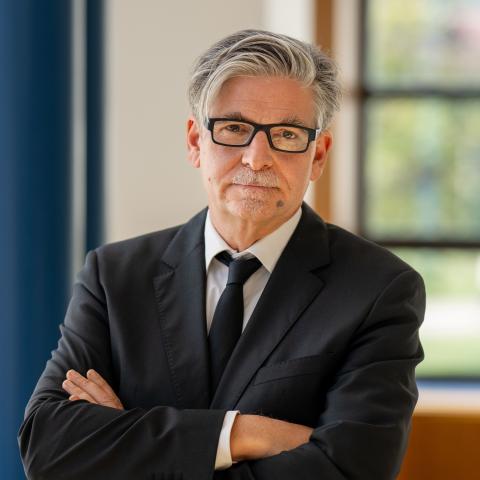
Müller has been a visiting fellow at the Wissenschaftskolleg zu Berlin, Collegium Helsinki, the Institut für die Wissenschaften vom Menschen in Vienna, and a number of other institutes; he has also been a Member of the School of Historical Studies, Institute for Advanced Study, Princeton. He has taught as a visiting professor at the École des Hautes Études en Sciences Sociales, Paris, the Ludwig-Maximilians-Universität in Munich, American University, Beirut, the Law School of Haifa University, the Humboldt-Universität in Berlin, and the Institut d’Études Politiques, Paris. He has delivered the Carlyle Lectures at Oxford and the Tanner Lectures at Cambridge; he also offered lectures on the European Union and democracy at the Collège de France in 2024.
Müller is a co-founder of the European College of Liberal Arts, Berlin (ECLA; today: Bard Berlin), Germany’s first private, English-speaking liberal arts college, for which he served as founding research director. He maintains a strong interest in international teaching and research initiatives centered on the liberal arts.
Müller is the author of Another Country: German Intellectuals, Unification and National Identity (Yale UP, 2000), A Dangerous Mind: Carl Schmitt in Post-War European Thought (Yale UP, 2003); he is also the editor of Memory and Power in Post-War Europe: Studies in the Presence of the Past (Cambridge UP, 2002) and German Ideologies since 1945: Studies in the Political Thought and Culture of the Bonn Republic (Palgrave, 2003). His book Constitutional Patriotism was published by Princeton University Press in 2007.
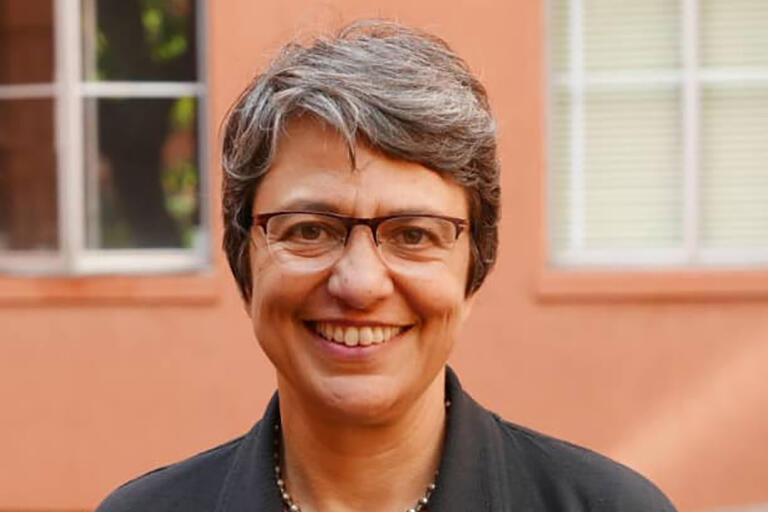
She has held awards and grants from the DAAD, the Economic and Social Sciences Research Council (ESRC) in the UK, the Institute for European Studies, the Institute for International Studies, the Townsend Center for the Humanities, the Center for Middle Eastern Studies, and Digital Humanities at Berkeley. She has been an invited fellow at the Institute for Advanced Study Konstanz and the Center for Cinepoetics at the Freie Universität Berlin
On campus, she holds affiliations with the Department of Film and Media, the Berkeley Center for New Media, Digital Humanities, the Center for Middle Eastern Studies, the Center for Race and Gender, the Department of Gender and Women’s Studies, and the Program in Critical Theory. She has participated in cross-campus collaborations on “Cultural Forms in Transit” and a strategic working group on “Circulation.” She is co-founder and concept coordinator of TRANSIT, the electronic journal launched by the Berkeley German Department in September 2005, and coordinator of the Multicultural Germany Project.