Columbia University Organizers
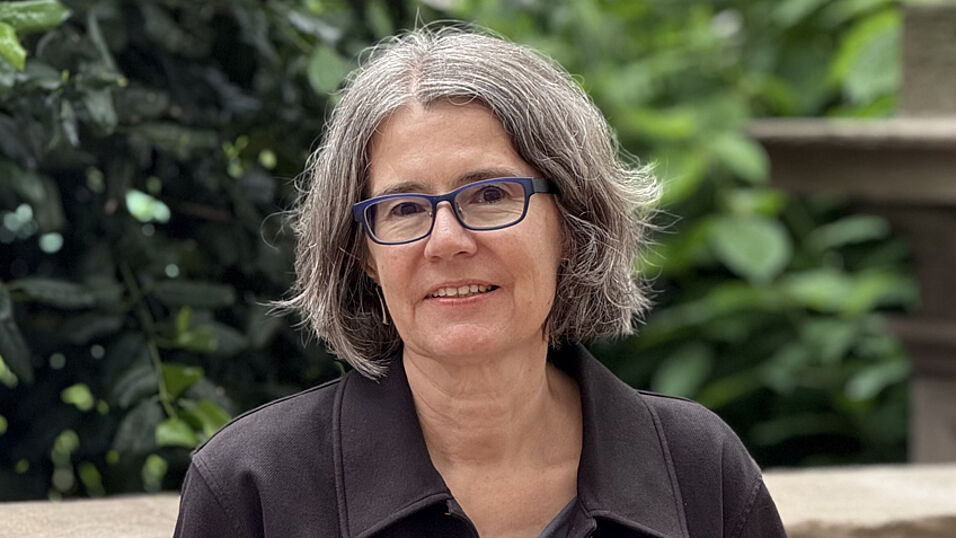
Prof. Dr. Claudia Breger
Claudia Breger is the Villard Professor of German and Comparative Literature. Her research focuses on twentieth- and twenty-first century culture, with emphases on film and theater; literary, media, and cultural theory; and the intersections of gender, sexuality and race.
She is particularly interested in combining theory with historical perspectives, and cultural studies approaches with aesthetic inquiries and close reading practices. Her earliest book, Ortlosigkeit des Fremden (1998), traces the genealogy of modern representations of Romani and other itinerant people at the intersection of race and gender around 1800. Prof. Breger’s second book, Szenarien kopfloser Herrschaft (2004), investigates reconfigurations of royal imaginaries beyond sovereignty in twentieth-century German culture, in scenarios ranging from imperial Egyptology to queer drag king performances. More recent book publications include An Aesthetics of Narrative Performance: Transnational Theater, Literature and Film in Contemporary Germany (2012) and Making Worlds: Affect and Collectivity in Contemporary European Cinema (2020). She is currently completing a book manuscript that rethinks political aesthetics in a dialogue between twentieth-century Critical Theory and contemporary perspectives in new materialism and Actor-Network-Theory, affect, queer, and Black radical theory.
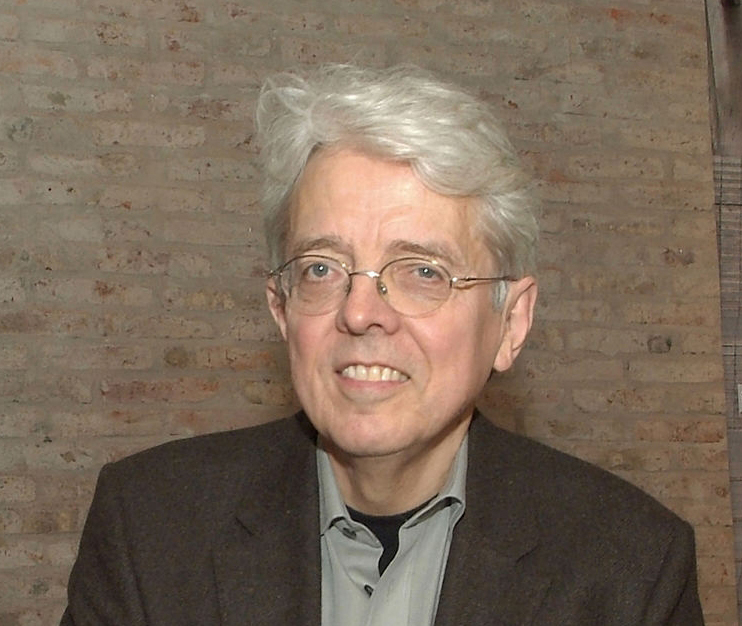
Prof. Dr. Emeritus Andreas Huyssen
Andreas Huyssen is the Villard Professor Emeritus of German and Comparative Literature at Columbia University, where he served as founding director of the Center for Comparative Literature and Society (1998-2003). He chaired the Department of Germanic Languages from 1986-1992 and again from 2005-2008. He is one of the founding editors of New German Critique (1974-), and he serves on the editorial boards of October, Constellations, and Germanic Review. In 2005, he won Columbia’s coveted Mark van Doren teaching award. His research and teaching focus on eighteenth to twentieth-century German literature and culture, international modernism in literature and the visual arts, Frankfurt School Critical Theory, postmodernism, and cultural memory of historical trauma in transnational contexts. His work has been translated into Spanish, Portuguese, French, Swedish, Danish, Slovenian, Hungarian, Polish, Turkish, Japanese, and Chinese.
His books include Drama des Sturm und Drang (1980), After the Great Divide: Modernism, Mass Culture, Postmodernism (1986), Postmoderne: Zeichen eines kulturellen Wandels (ed. with Klaus Scherpe, 1986), Modernity and the Text: Revisions of German Modernism (ed. with David Bathrick, 1989), Twilight Memories: Marking Time in a Culture of Amnesia (1995), Present Pasts: Urban Palimpsests and the Politics of Memory (2003), the edited volume on the culture of non-Western cities entitled Other Cities, Other Worlds: Urban Imaginaries in a Globalizing World (2008) and Modernismo después de la posmodernidad (Gedisa, 2010), a book of essays on art and literature so far only available in Spanish. His most recent books are William Kentridge, Nalini Malani: The Shadowplay as Medium of Memory (2013), Miniature Metropolis: Literature in an Age of Photography and Film (2015) and Memory Art in the Contemporary World: Confronting Violence in the Global South (2022).
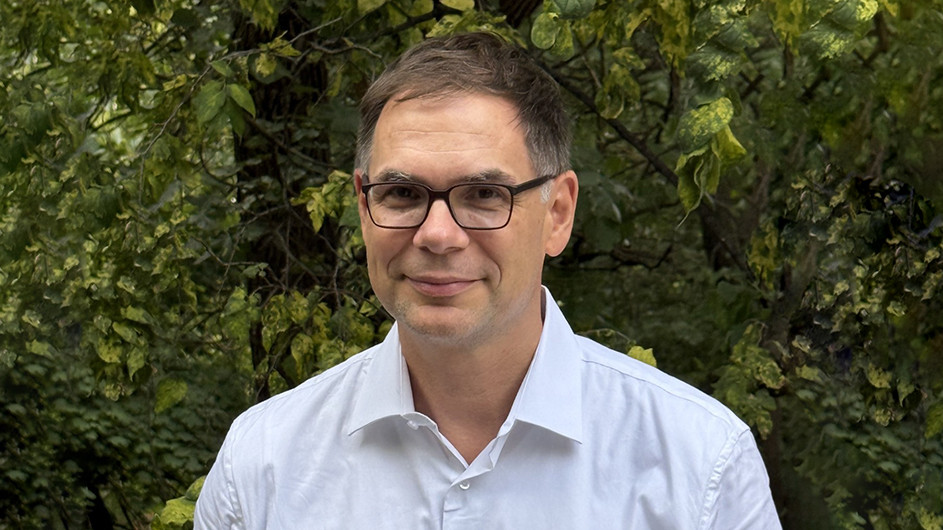
Prof. Dr. Oliver Simons
Oliver Simons studied German literature, cultural studies, and philosophy at Humboldt-University in Berlin, where he received his Dr.phil. in 2005. His teaching and research interests focus on literature and science, post-colonial studies, the “end” around 1800, and literary theories.
His first book, a comparative study on spatial concepts in philosophy, empirical psychology, art history, and literature around 1900, appeared in 2007: Raumgeschichten: Topographien der Moderne in Philosophie, Wissenschaft und Literatur (Wilhelm Fink Verlag). His second monograph, a book on literary theories, was published in 2009 (Literaturtheorien zur Einführung. Junius Verlag). He has co-edited volumes on German colonialism (Francke Verlag 2002), Kafkas Institutionen (2007), Ingeborg Bachmann and the media (2008), and The Oxford Handbook of Carl Schmitt (2017). His most recent book, Literary Conclusions: The Poetics of Ending in Lessing, Goethe, and Kleist examines how textual endings around 1800 correspond with theories of causality and conclusion. He is currently completing two monographs, Reading as Method and Understanding Theory. Oliver is also the editor of the peer-reviewed journal The Germanic Review: Literature, Culture, Theory.